About thecovertcode

This author has not yet filled in any details.
So far thecovertcode has created 145 blog entries.

Episode 106 – Sam Frentzel-Beyme

By |2026-03-14T02:52:57+00:00March 6th, 2026|Podcasts, Speaker|

Sam Frentzel-Beyme on Simplifying Growth Through Unified Systems

Growth is often portrayed as complex—layers of marketing tools, disconnected data systems, and endless workflows that slow teams down instead of moving them forward.

But according to Sam Frentzel-Beyme, growth doesn’t have to feel that way.

In this episode of The Covert Code Podcast, Anna Covert sits down with Sam Frentzel-Beyme, Founder of Stellant, to explore how organizations can simplify growth by aligning brand, marketing, and technology into one unified system.

With a career that includes working with organizations like Google, Pepsi, and Johnson & Johnson, Sam has spent more than two decades helping companies navigate the growing complexity of modern business systems.

His mission today: help organizations replace fragmented systems with unified strategies that drive real transformation.


Who Is Sam Frentzel-Beyme?

Sam Frentzel-Beyme is the founder of Stellant, a platform designed to integrate brand strategy, marketing operations, and AI-powered execution into a single growth framework.

Throughout his career, Sam has worked with some of the world’s most recognized organizations, helping them align brand, marketing, and technology to create scalable systems that support long-term growth.

What he discovered across industries was a surprisingly consistent challenge.

Organizations weren’t failing because they lacked ideas or ambition.

They were struggling because their systems weren’t working together.


The Hidden Cost of Disconnected Systems

Many organizations unknowingly create growth barriers by allowing different departments to operate independently.

Marketing tools don’t connect with brand strategy.
Technology teams build infrastructure without marketing alignment.
Leadership lacks visibility into how systems interact.

The result is fragmentation.

According to Sam Frentzel-Beyme, this fragmentation creates unnecessary complexity that slows growth and creates inefficiencies across the organization.

When systems are disconnected, teams spend more time managing processes than driving results.


Why Sam Founded Stellant

After years of consulting with organizations across industries, Sam recognized a major opportunity.

Companies didn’t need more tools.

They needed better integration.

That insight led him to create Stellant, a platform designed to unify brand, marketing, and operational systems into one cohesive growth engine.

Instead of managing multiple disconnected platforms, Stellant allows organizations to bring strategy and execution into alignment.

The goal is simple: remove complexity so growth can happen more naturally.


AI and the Future of Growth Systems

Artificial intelligence is transforming the way companies operate, but Sam believes the most successful organizations will be those that combine AI with human expertise.

AI can accelerate execution by:

• Automating workflows
• Analyzing large data sets
• Identifying patterns in customer behavior
• Supporting faster decision-making

But leadership, creativity, and strategy still rely on human insight.

Sam sees the future of growth as a collaboration between AI-powered systems and human-driven strategy.

Organizations that embrace this balance will have a major advantage in the evolving business landscape.


For-Profit vs Nonprofit Growth Challenges

Sam’s work spans both corporate and nonprofit organizations, giving him a unique perspective on how different sectors approach growth.

For-profit companies often struggle with scale and operational complexity.

Nonprofits frequently face limited resources and infrastructure.

Yet both face the same fundamental challenge: aligning strategy with execution.

By simplifying systems and creating unified workflows, organizations in both sectors can improve efficiency and focus more energy on achieving their mission.

Simplifying Growth for the Future

As technology continues to evolve, organizations are adopting more tools than ever before.

But more tools don’t automatically lead to better outcomes.

Sam Frentzel-Beyme believes the future belongs to organizations that simplify—not complicate—their growth systems.

By aligning brand strategy, marketing operations, and AI-enabled technology, companies can create scalable systems that support sustainable growth.

And in today’s rapidly changing marketplace, that clarity may be the greatest competitive advantage of all.

📖 GET THE BOOK: The Covert Code—Mastering the Art of Digital Marketing Amazon: https://rb.gy/wrht8 Barnes & Noble: https://rb.gy/vwev0a Target: https://rb.gy/jhpxri

✨ CONNECT WITH SAM FRENTZEL-BEYME Stellant: https://stellant.io LinkedIn:   / samfrentzelbeyme  

🎧 LISTEN ON ALL PLATFORMS: Spotify: https://open.spotify.com/show/0UcnL4g… Apple Podcasts: https://podcasts.apple.com/us/podcast… Amazon Music: https://music.amazon.com/podcasts/d15… iHeart Radio: https://www.iheart.com/podcast/269-th… YouTube Music:    / @thecovertcodepodcast   🌐 FOLLOW THE COVERT CODE Website: https://thecovertcode.com/ Instagram:   / covertcodeofficial   Facebook:   / thecovertcode   LinkedIn:   / covert-code-official  
Comments Off on Episode 106 – Sam Frentzel-Beyme

Episode 105 – Jan Kaeo

By |2026-03-14T02:48:01+00:00February 27th, 2026|In-Person, Podcasts, Speaker|

Jan Kaeo on Unlocking Your Team’s Potential Through Leadership, Trust, and Communication

Great teams are not created by chance.

They are built intentionally—through leadership, trust, communication, and confidence.

In this episode of The Covert Code Podcast, host Anna Covert sits down with Jan Kaeo, Principal, Owner, and Master Trainer at Dale Carnegie Training Hawaii & Guam, to explore how leaders can unlock their team’s potential using time-tested, human-centered techniques that still work in today’s fast-paced workplace.

Based in Honolulu, Jan Kaeo has spent more than 14 years helping individuals and organizations build confident leaders, engaged teams, and measurable results. Her work bridges classic leadership principles with modern workplace realities—from rapid change to remote teams to generational shifts.

This conversation is practical, grounded, and deeply relevant for leaders at every level.

Who Is Jan Kaeo?

Jan Kaeo is the Principal, Owner, and Master Trainer at Dale Carnegie Training Hawaii & Guam. She works with organizations across industries to develop leadership capability, improve communication, and strengthen team engagement.

Her focus isn’t surface-level motivation. It’s transformation.

Jan Kaeo helps leaders:

  • Build authentic confidence

  • Strengthen trust during uncertainty

  • Improve team performance

  • Increase engagement

  • Create sustainable cultural change

What Holds Teams Back the Most?

According to Jan Kaeo, the biggest thing holding teams back isn’t talent.

It’s trust.

When trust erodes—whether through poor communication, inconsistent leadership, or lack of psychological safety—performance follows. Leaders often underestimate how quickly disengagement spreads.

Jan emphasizes that high-performing teams are built when leaders:

  • Communicate clearly and consistently

  • Show genuine interest in their people

  • Follow through on commitments

  • Create space for open dialogue

The Leadership Mistake That Shows Up Everywhere

One common leadership mistake Jan Kaeo sees across industries?

Leaders assume their title equals influence.

It doesn’t.

Authority may grant position. Influence is earned.

Jan explains that effective leadership is built on:

  • Credibility

  • Consistency

  • Emotional intelligence

  • Authentic connection

When leaders skip those foundations, engagement drops—regardless of the industry.

Confidence: The Hidden Driver of Effective Leadership

Confidence isn’t arrogance.

It’s clarity.

Jan Kaeo shares that authentic confidence comes from preparation, self-awareness, and consistent action—not from pretending to have all the answers.

Leaders build confidence by:

  • Practicing communication skills

  • Seeking feedback

  • Taking ownership of mistakes

  • Investing in growth

When leaders model growth, teams follow.

Communication: The Multiplier of Performance

Communication isn’t just about delivering information. It’s about creating understanding.

Jan explains that leaders often miss the mark when they:

  • Over-communicate direction but under-communicate purpose

  • Fail to listen

  • Avoid difficult conversations

  • Deliver feedback without context

High-performing teams thrive when communication is:

  • Transparent

  • Purpose-driven

  • Two-way

  • Respectful

Unlocking Potential in People Who Don’t See It Themselves

One of the most powerful moments in this episode centers around helping individuals discover their potential.

Jan Kaeo believes people rise when leaders:

  • Recognize strengths publicly

  • Provide specific encouragement

  • Offer stretch opportunities

  • Reinforce belief consistently

Often, people don’t lack potential—they lack someone who sees it and names it.

The One Shift Leaders Can Make Today

If you’re looking for one immediate improvement, Jan’s advice is simple:

Be intentionally present.

Engagement improves when leaders:

  • Listen without distraction

  • Ask thoughtful questions

  • Show appreciation regularly

  • Connect purpose to performance

Small behavioral shifts create big cultural outcomes.

The Future of Leadership

Looking ahead, Jan Kaeo believes leaders will need:

  • Adaptability

  • Emotional intelligence

  • Communication mastery

  • Confidence under pressure

  • A human-first approach

Technology may evolve. But leadership remains deeply human.

Connect With Jan Kaeo

To learn more about Jan Kaeo and her work with Dale Carnegie Training Hawaii & Guam, connect with her on LinkedIn and explore leadership development opportunities in Hawaii and Guam.

GET THE BOOK: The Covert Code—Mastering the Art of Digital Marketing Amazon: https://rb.gy/wrht8 Barnes & Noble: https://rb.gy/vwev0a Target: https://rb.gy/jhpxri

✨ CONNECT WITH JAN KAEO, Dale Carnegie Training Hawaii & Guam: https://www.dalecarnegie.com/en/locat… LinkedIn:   / jankaeo  

LISTEN ON ALL PLATFORMS: Spotify: https://open.spotify.com/show/0UcnL4g… Apple Podcasts: https://podcasts.apple.com/us/podcast… Amazon Music: https://music.amazon.com/podcasts/d15… iHeart Radio: https://www.iheart.com/podcast/269-th… YouTube Music:    / @thecovertcodepodcast  

FOLLOW THE COVERT CODE: Website: https://thecovertcode.com/ Instagram:   / covertcodeofficial   Facebook:   / thecovertcode   LinkedIn:   / covert-code-official  

Comments Off on Episode 105 – Jan Kaeo

Episode 104 – Luke Hillman

By |2026-03-14T02:41:53+00:00February 20th, 2026|In-Person, Podcasts|

Luke Hillman on Turning Sustainability Into 7.7 Million Views (And Why Authentic Content Wins)

Going viral isn’t a strategy.

But authenticity is.

In this episode of The Covert Code Podcast, Annika sits down with Luke Hillman, social media manager for Altitude Water, to unpack how a raw, unscripted video about atmospheric water generation exploded to 7.7 million views—and what it reveals about the future of sustainability marketing.

Luke didn’t start with a marketing plan.

He started by yelling at parking lots.

Who Is Luke Hillman?

Luke Hillman is a sustainability-focused content creator and social media manager for Altitude Water. His niche? Off-grid living, urban infrastructure, passive design, clean water systems, and exposing environmental inefficiencies in everyday life are all important aspects of sustainable living.

Before going viral, Luke started by:

  • Posting sustainability videos organically

  • Breaking down complex topics into simple, digestible content

  • Rejecting overly scripted “corporate” marketing

  • Speaking directly and authentically

No paid media.
No agency playbook.
No hashtag strategy obsession.

Just consistency and conviction.

The Viral Moment: 7.7 Million Views

The breakthrough video?

Luke filmed himself standing next to an Altitude Water atmospheric water generator, explaining:

  • The machine produces 10 gallons of water per day

  • It pulls water directly from air

  • It solves real water contamination problems

  • Nobody is talking about it

The key?

He wasn’t selling.

He was reacting.

Authenticity beats optimization.

Luke didn’t:

  • Script the content

  • Over-engineer hashtags

  • Post at “perfect” times

  • Follow social media marketing “rules.”

He simply spoke like he would to a friend.

And the algorithm rewarded engagement.

Why This Worked: The Psychology of Pull Marketing

This wasn’t push marketing.

It was pull.

People are increasingly searching for:

  • Clean water solutions

  • Non-toxic lifestyles

  • Sustainable infrastructure

  • Grid independence

  • Off-grid systems

Luke tapped into an existing emotional undercurrent:
Younger generations are anxious about environmental degradation.

When content feels real, it spreads.

The Water Crisis Angle

Luke shares powerful context:

  • 80% of Florida’s drinkable water comes from one aquifer

  • Only 4 springs remain uncontaminated

  • Leachate from landfills pollutes groundwater

  • Forever chemicals (PFAS) are nearly irreversible

Altitude Water’s atmospheric water generation Solution:

  • Pulls water from air

  • Mineralizes it for proper hydration

  • Reduces reliance on contaminated supply systems

  • Provides off-grid resilience

The conversation goes deep into:

  • Why distilled water alone isn’t enough

  • The role of mineral infusion

  • Why bottled water is largely marketing-driven

  • The overlooked risk of infrastructure corrosion

Sustainability + Creator Economy = The New Influence Model

Luke makes a powerful point:

Traditional social media marketing agencies struggle because they optimize for appearance.

But people want:

  • Raw language

  • Honest reactions

  • Relatable delivery

  • Passive learning

  • Creator-first storytelling

He emphasizes:

  • Don’t overthink captions

  • Don’t overuse hashtags

  • Consistency > Perfection

  • Engagement > polish

TikTok’s transcription-based distribution means:
Your spoken words matter more than your tag strategy.

What’s Next for Luke Hillman?

Luke’s vision goes far beyond virality.

He wants to build:

  • Solar-powered communities

  • Atmospheric water-integrated housing

  • Passive solar design developments

  • Regenerative agriculture neighborhoods

  • Sustainable “solar punk” ecosystems

He’s studying Japan, Singapore, Germany, and the Netherlands for models of:

  • Public transport integration

  • Water capture systems

  • Urban sustainability

  • Decentralized infrastructure

His belief:

We don’t lack technology.
We lack political will.

The Bigger Question

If 7.7 million people watched a video about atmospheric water generation…

Are we finally ready for sustainability to go mainstream?

📖 GET THE BOOK: The Covert Code—Mastering the Art of Digital Marketing on Amazon: https://rb.gy/wrht8 Barnes & Noble: https://rb.gy/vwev0a Target: https://rb.gy/jhpxri ✨ CONNECT WITH LUKE HILLMAN Instagram: @lukestoptalking Email: Luke@thehillmans.com Altitude Water: https://altitudewaterusa.com 🎧 LISTEN ON ALL PLATFORMS Spotify: https://open.spotify.com/show/0UcnL4g… Apple Podcasts: https://podcasts.apple.com/us/podcast… Amazon Music: https://music.amazon.com/podcasts/d15… iHeart Radio: https://www.iheart.com/podcast/269-th… YouTube Music:    / @thecovertcodepodcast   🌐 FOLLOW THE COVERT CODE Website: https://thecovertcode.com/ Instagram:   / covertcodeofficial   Facebook:   / thecovertcode  LinkedIn:   / covert-code-official  

Comments Off on Episode 104 – Luke Hillman

Anna Covert to Headline Quantcast Breakfast Byte in New York

By |2026-02-19T03:20:21+00:00February 13th, 2026|Press Releases|

Forbes author and digital strategist to speak on modern marketing mastery

Honolulu, HI—October 10, 2024—Digital marketing strategist and Forbes author Anna Covert will take the stage at Quantcast’s upcoming Breakfast Byte event on October 17 from 9:00 to 11:00 AM in the Farnsworth Room at The Beekman Hotel in New York City.

The educational networking session will spotlight Covert’s newest book, The Covert Code: Mastering the Art of Digital Marketing, and explore what truly separates high-performing digital marketers from the rest.

During her presentation, Covert will guide attendees through the mindset, strategy, and infrastructure required to compete in today’s rapidly evolving digital environment. Instead of talking about surface-level strategies, she will talk about the deeper questions that business owners and marketing leaders need to ask themselves in order to grow their businesses in a way that is both scalable and long-lasting.

Inside The Covert Code

Drawing from more than 20 years of hands-on industry experience, Covert distills lessons learned while working with major brands such as SunPower and Panasonic into a practical framework for navigating the digital marketplace.

The book provides:

  • Strategic guidance on selecting and managing marketing partners

  • Insights into building efficient, high-performing campaigns

  • Tools for maximizing return on marketing investment

  • Clear warnings about common industry pitfalls

Each chapter builds toward a structured roadmap for establishing a durable digital presence—one that balances ambition with accountability.

Real-world case studies from Covert Communication further demonstrate how companies across industries have implemented these strategies to generate measurable results.

Beyond the Book: Ongoing Thought Leadership

In addition to the book, Covert contributes regularly to Forbes with monthly articles addressing emerging digital trends. Recent topics include:

  • Are We Approaching the End of the Data Age?

  • FOMO and AI: Do You Have Fear of Missing Out?

Her thought leadership also extends to The Covert Code Podcast, where she interviews founders, marketers, and industry leaders—often with a special emphasis on the solar sector. The podcast blends practical education with energetic, candid conversation, offering both inspiration and tactical insight.

A Mission to Simplify Digital Complexity

“My goal has always been to help business leaders make confident decisions in an increasingly complex digital landscape,” Covert shared. “Marketing platforms will continue to evolve—but clarity, discipline, and strategic thinking remain timeless.”

Comments Off on Anna Covert to Headline Quantcast Breakfast Byte in New York

Episode 103 – David Blivin

By |2026-02-13T23:32:31+00:00February 13th, 2026|Author, Podcasts|

David Blivin on Why Great Ideas Don’t Need Silicon Valley to Succeed

Great ideas don’t live exclusively in Palo Alto.

They live in research parks, national labs, university basements, and founder brains—everywhere. What’s unevenly distributed isn’t innovation. It’s money and management.

In this episode of The Covert Code Podcast, host Anna Covert sits down with David Blivin, founder and managing director of Cottonwood Technology Funds and author of Crossing the Cactus, to unpack what it really takes to commercialize innovation outside of traditional tech hubs.

David Blivin has spent decades investing in early-stage technology—starting in the Research Triangle Park ecosystem, building one of the largest funds in the I-85 corridor, and later launching Cottonwood in the Southwest with a focus on “hard tech”—science-backed innovations that can be patented, protected, and manufactured.

This conversation is a roadmap for founders, investors, and economic development leaders who believe the next big breakthroughs won’t come from the usual ZIP codes.

Who Is David Blivin?

David Blivin is the founder and managing director of Cottonwood Technology Funds, an early-stage venture firm focused on hard tech—materials, semiconductor innovation, electric motors, health tech, and other science-based breakthroughs that require more than a pitch deck to prove.

He began his career in accounting and finance, earned his MBA at Duke, and entered venture capital after seeing a major problem firsthand: regions full of innovation but short on the kind of capital and expertise startups need to scale.

That gap became the mission.

The Big Idea: Innovation Is Everywhere—Capital and Management Aren’t

One of David Blivin’s clearest points is also the most important:

Great ideas are everywhere. What’s not everywhere is money and management.

In other words, if your region wants real economic diversification through tech commercialization, it can’t stop at supporting research. It has to solve for the full triangle:

  1. Ideas (usually abundant)

  2. Money (often scarce locally)

  3. Management (the hardest to build and keep)

David Blivin contends that the building of successful ecosystems occurs when these three elements consistently connect, not sporadically.

Why Venture Capital Shifted Away From Hard Tech (and Why It’s Coming Back)

David Blivin explains a key venture trend that founders feel every day: VC moved heavily toward software because it’s faster and cheaper to scale.

  • Software can test markets quickly

  • Scaling doesn’t require manufacturing

  • Exits can happen earlier

  • Capital requirements are lower

Hard tech is different. Manufacturing is real. Supply chains matter. Prototypes take time. Later investors want proven execution and experienced operators.

But David also points out something that’s easy to forget in AI hype cycles:

You still need “things.”

AI needs chips. Data centers need power efficiency. Quantum needs hardware. The “internet of things” still requires physical devices.

That’s why investors are starting to re-engage with hard tech again—because the future isn’t only digital. It’s physical.

The Book: Crossing the Cactus and the Ecosystem Problem Nobody Wants to Solve

In Crossing the Cactus, David Blivin lays out a practical roadmap for commercializing innovation beyond Silicon Valley—with a focus on what states, cities, and countries can actually do if they want startups to launch and stay.

He shares an issue that quietly drains entire regions:

Universities and national labs license valuable IP… and it leaves the state.

Even when brilliant research originates locally, it often gets commercialized somewhere else because the capital and business talent aren’t nearby.

The result: the idea becomes a product, but not in the place that created it.

“Money Follows Management” vs “Management Follows Money”

This is one of the most useful frameworks in the entire episode.

David Blivin says the traditional venture mantra is:

Money follows management.

That works in places like Silicon Valley and Boston—where experienced startup executives are everywhere.

But in under-resourced ecosystems, David flips it:

Management follows money.

If early capital is meaningful enough, it becomes a magnet that attracts the operators who know how to build companies. But the catch is this: many regions don’t invest enough early to recruit real business leadership.

And without a business leader, hard tech companies struggle to raise the next round—because later investors want to see someone who has scaled before.

The Hard Truth About People

David Blivin shares a striking pattern from his investing experience:

When startups recruit top CEO talent from outside the region, those leaders often don’t move—and eventually, the company moves to where the CEO’s network is.

That’s why “people strategy” is the missing piece in economic development conversations.

Buildings don’t create jobs.
People do.

And if regions want to keep innovation local, they have to create incentives that make it rational for executives and builders to plant roots—not just fly in quarterly.

David Blivin’s Advice for Founders Raising Early Capital

For founders with big ideas, David Blivin offers grounded advice:

  • Establish a strong legal and advisory network, as a lawyer with connections to the venture ecosystem can facilitate access to early capital.

  • Build enough proof (prototype, demo, MVP) to be “presentable.”

  • Talk to customers early—make sure you’re solving a need-to-have, not a nice-to-have.

  • Don’t assume “1% of a huge market” is easy—no one gives away market share.

  • If you’re technical, find your business counterpart—someone who can translate value, pricing, competitive landscape, and go-to-market strategy.

The message is simple: breakthrough tech needs breakthrough execution.

Connect with David Blivin

David Blivin is the founder and managing director of Cottonwood Technology Funds and the author of Crossing the Cactus, a practical guide for commercializing innovation and building sustainable tech ecosystems beyond traditional hubs.

To learn more, reach out via Cottonwood Technology Funds.

Comments Off on Episode 103 – David Blivin

Episode 102 – Ashton Cudjoe

By |2026-02-07T19:16:38+00:00February 6th, 2026|Podcasts|

Ashton Cudjoe on Building the Future of Education with AI Workflows

Before we were all talking about AI’s impact on industries, Ashton Cudjoe was already using AI to reshape how education is delivered.

In this episode of The Covert Code Podcast, I sit down with Ashton Cudjoe, founder and CEO of Hawaii Medical College, to discuss how AI workflows are revolutionizing education—and how Ashton is pioneering its use at HMI.

Ashton discusses how his school has implemented AI-driven chatbots and voice AI systems to engage prospective students, streamline operations, and boost conversion rates by 30%. He explains how AI helps students navigate the enrollment process and how it can personalize education in ways that were never possible before. We dive into the future of education, AI’s role in teaching, and how to strike the right balance between human interaction and automation.

If you’re in education, tech, or simply curious about how AI will shape the future of learning, this episode offers fresh perspectives and actionable insights.

AI in Education: Starting with the Right Tools

Ashton’s journey with AI in education started with a simple question: how can I make the learning experience better for students?

He didn’t jump into AI expecting it to solve everything. Instead, he approached it like an experiment—picking the right tools, seeing what worked, and using AI as a support system, not a replacement. The key? Letting AI handle the repetitive tasks while keeping the human touch for the important, emotionally intelligent aspects of learning.

Ashton’s first step was moving from a human-managed chat service to an AI chatbot that could engage students automatically on the website. What followed? 30% of web traffic now converts into applications, thanks to AI-powered interactions.

The Human Touch with AI: Finding the Right Balance

AI isn’t just about efficiency—it’s about emotional resonance. Ashton shares how important it is to strike the balance between automation and emotional intelligence. His AI system doesn’t just respond mechanically; it mimics human warmth by creating a sense of calm, which is crucial for prospective students, especially in an environment like Hawaii Medical College, where human interaction is a key part of the education process.

What’s exciting? As the AI engages more, it gets better. The voice AI not only understands the questions better, but it also adapts—giving more precise answers and even learning nuances like the local pigeon dialect.

AI’s Potential: A “Just in Time” Model for Education

One of the most fascinating aspects of this conversation is the shift from a “just in case” educational model to a “just in time” one. Traditional education has long been about preparing students for a future that may or may not happen, but AI changes the game by offering a more personalized, on-demand experience. Ashton describes how AI allows students to learn at their own pace—so that they no longer have to wait for the entire class to catch up. It’s truly a game-changer for modern education.

AI and the Future of Teaching: What’s Next?

Ashton is focused on more than just teaching students. He’s also reimagining how teachers interact with AI—using it as a support tool. He mentions AI-powered tutoring programs that can help students who are struggling without the stigma of asking for help. AI makes it possible to give students personalized feedback without the traditional pressure. But the human element, he stresses, will always be critical in education. Teachers are still needed to ensure students are thinking critically, asking the right questions, and engaging in creative problem-solving.

Looking Forward: The Role of AI in Education

Ashton’s vision for education is simple: AI should enhance the student experience, not replace it. As the technology evolves, the challenge will be finding ways to use AI to make education more accessible, personalized, and impactful for all students. His future goals? Expand AI tutoring for even more personalized support, bridge the gap between tech education and real-world applications, and continue refining AI workflows to better serve students at Hawaii Medical College.

Connect with Ashton Cudjoe & Hawaii Medical College

Comments Off on Episode 102 – Ashton Cudjoe

Episode 101 – Gina Riley

By |2026-02-05T22:33:53+00:00January 30th, 2026|Author, Podcasts|

Being qualified used to be enough.

A strong résumé. Years of experience. The right titles. The right education.

But in today’s job market, qualification alone doesn’t get you hired—and for many professionals, that realization comes after months of silence, rejection, or watching roles disappear altogether.

In this episode of The Covert Code Podcast, host Anna Covert sits down with Gina Riley, executive career coach, international speaker, Forbes Coaches Council member, and author of Qualified Isn’t Enough: Develop Your Story, Land the Interview, Win the Job.

Gina Riley is also the creator of the Career Velocity® System, a framework designed to help professionals navigate career transitions, age bias, oversaturated applicant pools, and a hiring landscape increasingly shaped by AI and automation.

This conversation isn’t about résumé tweaks.
It’s about relevance, storytelling, and human connection—the elements that still matter when algorithms dominate the front door.

Why “Qualified Isn’t Enough” Became a Book

Gina Riley’s path to writing Qualified Isn’t Enough didn’t come from theory—it came from pattern recognition.

After stepping away from the workforce for fifteen years to raise her children, Gina reentered through executive search, training, and coaching. There, she was asked to help senior professionals—many over forty—navigate career transitions that felt increasingly unforgiving.

What she saw again and again:

  • Overqualified candidates being ignored

  • Résumés doing all the talking

  • Brilliant professionals unable to explain their value

The problem wasn’t experience.
It was a story.

Gina spent years studying what actually moves hiring decisions. Then she tested it. Then she systemized it. The result became Career Velocity—and eventually, the book she describes as a “framework book,” not a collection of tips.

The First Thing Job Seekers Get Wrong

According to Gina Riley, most job searches fail before they even begin.

Not because people aren’t capable—but because they start in the wrong place.

“It doesn’t start with the résumé.”

Instead, Gina teaches professionals to build a unique value proposition grounded in:

  • Strengths

  • Values

  • Motivating skills

  • Proven results

  • Real stories of impact

This foundation allows candidates to explain not just what they’ve done—but why they matter in the context of the organization’s problems.

Without that clarity, networking stalls, interviews ramble, and referrals fall flat.

Why Everyone Is Applying—and No One Is Getting Hired

One of the most practical insights from this episode tackles a question many professionals are asking:

Why are there thousands of applicants for some roles, while other industries can’t find workers at all?

Gina points to the “easy apply” trap.

When applying becomes frictionless, strategy disappears. Job seekers scatter applications randomly, dopamine surges, and genuine momentum fails to emerge. Meanwhile, recruiters—overwhelmed and understaffed—lean harder on outdated ATS systems and automation.

The solution isn’t more applications.
It’s focus.

Gina recommends narrowing targets, building relationships inside organizations, and running what she calls a mini personal marketing campaign—one built on relevance, not volume.

The Hidden Job Market (and Why It Exists)

The “hidden job market” isn’t about favoritism—it’s about speed and risk.

When roles open unexpectedly, leadership teams ask one question first:

“Who do we know?”

Not because they’re biased—but because hiring is expensive, risky, and time-sensitive.

Professionals who understand this don’t wait for postings. They build visibility, credibility, and relationships before roles become public.

That’s how opportunity actually moves.

Executive Presence Isn’t a Title—It’s a Signal

A powerful thread throughout this conversation is executive presence—or what Gina reframes as professional presence.

It’s not about suits or seniority.
It’s about:

  • How you show up

  • How you communicate

  • How you read the room

  • How confidently and decisively you speak

For job seekers of all ages, presence becomes a trust signal—especially in a market where age bias and perception can quietly derail opportunity.

AI Won’t Replace You—But Irrelevance Will

Gina Riley doesn’t see AI as the enemy. She sees it as a filter.

Roles built on repetition and surface-level execution are disappearing. What remains are roles that require:

  • Judgment

  • Context

  • Interpretation

  • Storytelling

  • Leadership

The professionals who adapt—by learning how to use AI as a tool rather than fearing it—are the ones who stay competitive.

Reinvention isn’t optional.
But it is possible.

Building Visibility Through Thought Leadership

One of Gina’s strongest recommendations for professionals right now is thought leadership—not in the influencer sense, but in the credibility sense.

You don’t need a TEDx stage.
You need to be seen in the right rooms.

That can mean:

  • Meaningful LinkedIn comments

  • Industry conversations

  • Community participation

  • Sharing perspective, not platitudes

Visibility builds trust.
Trust creates opportunity.

Why Gina Riley’s Perspective Matters

Gina Riley brings together HR, executive search, coaching, and lived experience to answer a question millions of professionals are quietly asking:

“Why isn’t my experience enough anymore?”

Her answer is honest—and empowering.

The market hasn’t rejected you.
It’s asking you to show up differently.

If you want to learn more or connect with Gina Riley:

Comments Off on Episode 101 – Gina Riley

The Covert Code Podcast Celebrates 100,000 Followers and 100 Episodes

By |2026-01-27T21:26:02+00:00January 23rd, 2026|In The Media|

The Milestone Episode Features Author, Speaker, and Leadership Expert Katie Goar

HONOLULU, HI, UNITED STATES, January 22, 2026—The Covert Code Podcast, hosted by digital marketing strategist and Forbes-published author Anna Covert, is marking two major milestones: surpassing 100,000 followers across YouTube plus other platforms and releasing its 100th episode, featuring a special in-depth interview with leadership expert, author, and speaker Katie Goar.

Launched in spring 2024, The Covert Code Podcast has rapidly grown into a trusted destination for conversations on digital innovation, marketing, leadership, and emerging technology. What began as a deep dive into topics such as AI, eCommerce, the solar industry, and evolving tech ecosystems has expanded into a weekly interview format spotlighting influential leaders, bestselling authors, entrepreneurs, and creatives from Hawaii and around the world.

“Reaching 100,000 followers and 100 episodes reflects consistency, curiosity, and the powerful conversations we’ve been able to share,” stated Anna Covert. “Featuring Katie Goar for our 100th episode felt like the perfect way to celebrate what this podcast stands for: thoughtful leadership, purpose-driven business, and real impact.”

The 100th episode features Katie Goar, a nationally recognized speaker, author, and leadership development expert known for her work in organizational culture, team performance, and human-centered leadership. Her appearance underscores the podcast’s commitment to elevating voices that inspire both personal and professional growth. More about Katie Goar can be found at katiegoar.com.

Some of the many featured guests on The Covert Code Podcast include:

The podcast’s continued growth reflects its resonant message: delivering practical strategy, fresh insight, and authentic conversations that help listeners navigate today’s fast-changing business landscape.

In addition to The Covert Code Podcast, Anna Covert expanded her podcast portfolio with the launch of the Solar Coaster Book Podcast, inspired by her second book, The Solar Coaster. The podcast explores the challenges and successes of the solar industry, featuring seasoned industry leaders discussing solar sales, financing, construction, community partnerships, and diversification. Within four months, the Solar Coaster Book Podcast surpassed 36,000 YouTube followers.

New episodes of The Covert Code Podcast are released every Friday, with the Solar Coaster Book Podcast airing on Wednesdays. Both podcasts are available on YouTube, Apple Podcasts, Amazon Music, iHeart Radio, and Spotify, as well as at TheCovertCode.com/podcast and solarcoasterbook.com/podcasts.

Comments Off on The Covert Code Podcast Celebrates 100,000 Followers and 100 Episodes

Episode 100 – Katie Goar

By |2026-02-10T02:57:20+00:00January 23rd, 2026|Podcasts|

Katie Goar on Leadership That Lifts, Not Labels: Why Housing Stability Is a Leadership Issue

Leadership doesn’t always begin in boardrooms or policy briefings.

Sometimes, it begins with survival.

In the 100th episode of The Covert Code Podcast, host Anna Covert sits down with Katie Goar, President of Quadel and a nationally recognized leader in affordable housing and community development.

Featuring Katie Goar for this milestone episode was intentional. Her work and story embody the authority this podcast aims to showcase: leadership grounded in personal experience, long-term perspective, and prioritizing impact over appearances.

Katie Goar’s TEDx talk, her leadership at Quadel, and her advocacy for housing systems that prioritize dignity, compliance, and real outcomes have made her widely known. However, she shaped her perspective on leadership long before her career started.

It started when she was eleven years old.

Katie Goar’s Early Experience with Housing Instability

Katie Goar’s leadership philosophy is not theoretical.

As a child, Katie and her siblings experienced homelessness and housing instability—living in a tent, preparing food without a kitchen, and sleeping on the ground. At the time, they made a pact never to speak about it. Not out of embarrassment alone, but out of fear that being overheard could separate them from one another.

That silence followed them for decades.

When Katie Goar took the TEDx stage in 2024, she broke it—for the first time publicly, and for the first time in front of colleagues who had worked alongside her for years without knowing her backstory.

What emerged was not trauma for performance, but clarity: housing is not charity—it is infrastructure.

That moment reframed not only how audiences understand affordable housing but also how leadership itself should be defined.

Why Housing Stability Changes Everything

One of the most resonant moments in this episode comes when Anna Covert shares a story from her work with the Boys & Girls Club in Hawai‘i.

A child arrived every day, went to the back of the room, and slept.

Staff eventually realized why: it was the only place the child felt safe enough to rest.

That insight mirrors what Katie Goar has seen repeatedly in her career. When people live with constant instability, everything becomes a threat—decision-making, risk tolerance, trust, and even hope.

Housing stability is not about comfort.
It is about safety.

And once safety exists, everything else—education, leadership, contribution—can follow.

From Lived Experience to National Housing Leadership

Today, Katie Goar leads Quadel, a national consulting and compliance firm that supports housing authorities, nonprofits, developers, and public agencies across the United States.

Her work focuses on strengthening housing programs through:

  • Regulatory compliance

  • Operational efficiency

  • Program accountability

  • Scalable systems that actually serve people

The demand is overwhelming.

In one recent case discussed on the podcast, over 18,000 applicants applied for just 300 housing vouchers—a stark illustration of the supply crisis facing communities nationwide.

This is not a failure of effort.
It is a failure of capacity.

Contrary to popular narratives, the majority of people using affordable housing today are employed—teachers, paramedics, nurses, and service workers—priced out of the very communities they keep running.

As Katie Goar explains, the story the public hears has not caught up with reality.

The Cost of Labels—and Why Language Matters

A central theme in this episode is the danger of labeling.

Homelessness is not an identity.
It is a condition—often temporary.

When communities reduce people to labels, solutions stall. But when they focus on systems—access, affordability, services—progress becomes possible.

Katie Goar points to succeeding cities not because of ideology, but because of leadership: local coalitions, shared funding responsibility, and a willingness to address the issue head-on rather than displace it.

The difference isn’t politics.
It’s execution.

What the Future Demands from Leaders

Looking ahead, Katie Goar highlights what many housing experts call the silver tsunami: a rapidly growing senior population lacking affordable housing, adequate retirement savings, or access to long-term care.

Without intervention, housing instability will increase—not decline.

The solution requires:

  • Local champions

  • Community buy-in

  • Thoughtful design

  • Willingness to build, not just debate

Saying no to housing development doesn’t preserve communities—it accelerates displacement.

As Katie notes, the communities that succeed are the ones willing to think beyond short-term discomfort and toward long-term stability. Why Katie Goar’s Leadership Matters

Katie Goar’s story resonates because it bridges lived experience with systems leadership.

She leads with empathy but operates with rigor.
She honors complexity—without paralysis.
And she invites others to join the work.

That is leadership that lifts, not labels.

If you want to follow Katie Goar’s work or continue the conversation, you can connect with her here:

GET THE BOOK: The Covert Code—Mastering the Art of Digital Marketing

LISTEN ON ALL PLATFORMS

 ABOUT HOST ANNA COVERT

Anna Covert is the host of The Covert Code Podcast and author of The Covert Code—Mastering the Art of Digital Marketing and The Solar Coaster. With over two decades of experience in digital marketing and business strategy, Anna has worked with companies including Microsoft, Apple, and IBM and leads Covert Communication, Hawai‘i’s largest digital agency.

Anna’s Websites

Disclosure
This post contains affiliate links. If you make a purchase through these links, I may earn a small commission at no extra cost to you.

Comments Off on Episode 100 – Katie Goar

Episode 99 – Tony Martignetti

By |2026-01-21T18:42:11+00:00January 16th, 2026|Podcasts|

What if your greatest challenges could become your most powerful leadership tools? In this episode of The Covert Code Podcast, I sit down with Tony Martignetti—change catalyst, bestselling author of “The Campfire Lessons” and “Climbing the Right Mountain,” global keynote speaker, coach, and host of The Virtual Campfire Podcast.

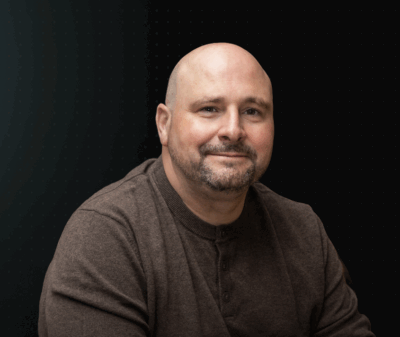
Tony Martignetti headshot featured on The Covert Code Podcast, leadership coach, bestselling author, and change catalystMeet Tony Martignetti

Tony Martignetti is a leadership coach, entrepreneur, idea generator, people connector, and curious adventurer. He brings together practical experience, formal training, and deep curiosity to elevate leaders and equip them with the tools they need to navigate change with confidence and clarity.

Tony is driven by a passion for helping people find clarity in their lives so they can feel energized, fully present, and unstoppable. When leaders unlock their potential and lead from a place of inspired purpose, they create meaningful impact—not only for themselves, but for everyone around them. This belief is at the heart of Tony’s work and the mission that guides everything he does.

Before becoming a coach, Tony built a career in finance and strategy, working with some of the world’s leading life sciences companies. Along the way, he also managed small businesses and founded a financial consulting firm, giving him a well-rounded perspective on leadership across corporate, entrepreneurial, and advisory environments.

Through his story and work, Tony shares three powerful lessons designed to help others move from where they are today to where they truly want to be—both professionally and personally.

Comments Off on Episode 99 – Tony Martignetti
Go to Top