About thecovertcode

This author has not yet filled in any details.
So far thecovertcode has created 170 blog entries.

What ChatGPT Advertising Means for the Future of Digital Marketing

By |2026-06-19T03:05:01+00:00June 2nd, 2026|Extended Content|

A series of major platform shifts tell the history of digital marketing.

First came websites.

Then search engines.

Then social media.

Then mobile.

Now, artificial intelligence is reshaping how consumers find information and make purchasing decisions.

The rise of ChatGPT and other AI-powered platforms is creating a new marketing frontier that business leaders can no longer ignore.

From Search Engines to Answer Engines

For years, marketers focused on ranking webpages.

Today, consumers increasingly ask AI systems direct questions:

  • Who is the best company for this service?
  • Which provider should I trust?
  • What agency should I hire?
  • What product is best for my situation?
  • Who is the expert in this industry?

Instead of presenting a long list of search results, AI platforms often provide direct answers.

That changes everything.

Businesses now need to optimize not only for search engines but also for answer engines.

This is one of the reasons I wrote The Covert Code: to help business owners better understand the rules of digital marketing and how to make smarter decisions online.

Understanding ChatGPT Advertising

ChatGPT advertising and sponsored placements are part of a larger shift toward conversational discovery.

As AI platforms continue to grow, businesses will need to understand how to appear in AI-generated recommendations, sponsored placements, and conversational search results.

This does not mean traditional SEO is going away.

It means SEO is evolving.

The brands that succeed will be the ones that combine SEO, AEO, paid media, content strategy, authority building, reputation management, and AI visibility tracking.

The New Digital Marketing Funnel

The traditional digital marketing funnel often looked like this:

Awareness → Search → Website → Conversion

The AI-powered funnel looks more like this:

Question → Recommendation → Website → Conversion

Notice what changes.

The search results page may no longer be the main point of discovery.

That means AI needs to understand your business before the customer ever reaches your website.

Why Authority Matters More Than Ever

AI platforms are designed to organize information and provide useful answers. To achieve that, they look for signals of trust, credibility, and relevance.

Those signals may include helpful website content, clear service descriptions, reviews, external mentions, podcast appearances, thought leadership, structured data, and industry-specific expertise.

This is why authority is becoming one of the most important assets in modern marketing.

Through The Covert Code Podcast, I regularly speak with business leaders, founders, marketers, authors, and innovators about what it takes to build trust in a crowded digital world.

AI is accelerating that conversation.

What Is AEO?

AEO stands for Answer Engine Optimization.

It is the process of structuring your content so AI platforms can better understand who you are, what you do, who you serve, and why your business is credible.

A strong AEO strategy may include FAQ content, schema markup, topic clusters, internal linking, local SEO, service page optimization, review strategy, digital PR, podcast content, and authority-focused blog posts.

You can also explore more marketing tools and insights through The Covert Code free resources.

How Businesses Can Prepare

Businesses that want to prepare for AI search and ChatGPT advertising should start with a visibility audit.

Important questions include:

  • Does AI know your company exists?
  • Is your business mentioned when customers ask relevant questions?
  • Are competitors showing up more often than you?
  • Is your website structured clearly?
  • Do you have enough authority signals?
  • Are your services straightforward for AI systems to understand?
  • Are you tracking AI referral traffic and leads?

If the answer to any of these questions is unclear, your business may need an AI visibility strategy.

How Covert Communication Can Help

At Covert Communication, we help businesses improve their visibility across search engines, answer engines, and emerging AI platforms.

Our team supports businesses with SEO, AEO, AI-ready content, ChatGPT advertising strategy, paid media, website optimization, digital PR, authority building, AI visibility reporting, and lead generation strategy.

The goal is not just to get more clicks.

The goal is to make your business easier to find, trust, and choose.

Interested businesses can contact Covert Communication to learn more about AI Visibility Assessments and ChatGPT advertising opportunities.

Final Thoughts

ChatGPT advertising may become one of the next major digital advertising channels.

But even before AI ads become mainstream, AI visibility is already influencing how people discover businesses online.

The future of marketing is conversational.

The question is not whether AI will impact your business.

The question is whether your business will be part of the answers AI provides.

To keep learning, explore The Covert Code News & Events, listen to The Covert Code Podcast, or contact us to start a conversation.

Comments Off on What ChatGPT Advertising Means for the Future of Digital Marketing

Episode 115 – Lou Chatta

By |2026-06-09T21:17:33+00:00May 28th, 2026|Author, Get Your Geek On, Podcasts|

The AI Experience Economy: How Pintours Is Reimagining Travel with Lou Chatta

On this episode of The Covert Code Podcast, I sat down with Lou Chatta, founder of Pintours, to discuss the AI Experience Economy and how artificial intelligence is transforming the way people travel, explore, and connect with places around the world.

Lou’s company is building an AI-powered orchestration layer for travel experiences, combining transportation, attractions, restaurants, local knowledge, and personalization into one seamless journey. Instead of forcing travelers into generic group tours or expensive private guide experiences, Pintours is using AI to make personalized, guided experiences more accessible, scalable, and affordable.

From Apple Special Projects to AI-Powered Travel

Before launching Pintours, Lou worked at Apple Special Projects, where he helped develop health-focused products and technologies. That experience showed him how to turn subject matter expertise into powerful technology.

The inspiration for Pintours came from something much more personal: his father was a tour guide. Lou saw firsthand how much knowledge local guides carry in their heads and how difficult it is to scale that kind of expertise.

That became the central idea behind Pintours: what if the knowledge of local guides could be digitized and used to create personalized experiences for anyone, anywhere?

Why Generic Travel Experiences Fall Short

One of the biggest problems Lou identified is that most travel experiences are generic. A group tour may work for logistics, but it often fails to meet the needs of individual travelers.

Some people want history. Some want food. Some want romance, adventure, shopping, family-friendly experiences, accessibility, or a very specific pace. A private guide can personalize the journey, but that kind of experience is often expensive and difficult to scale.

Pintours is trying to solve that gap.

How Pintours Works

Lou described Pintours as an AI orchestration layer. In simple terms, it acts almost like a best friend who knows your preferences and can plan the experience for you.

A traveler might say they have only one hour in a destination, want to learn about history, need transportation, and want food afterward. Pintours can then help coordinate the transportation, tickets, storytelling, restaurant reservation, and timing into one connected experience.

The experience can also be adapted for each person. A parent, child, and grandparent could all be in the same location but receive storytelling tailored to their interests.

That level of personalization is where AI becomes especially powerful.

Empowering Local Guides

One of the most important parts of the Pintours model is that it does not simply replace local guides. It creates a way for guides to turn their knowledge into a scalable income stream.

Pintours works with local guides by interviewing them, gathering their expertise, and building AI-powered experiences based on their knowledge. When people use those experiences, guides earn money from the content and expertise they contributed.

This is a powerful example of how AI not only automates but also empowers people with deep local knowledge.

AI, Trust, and the Future of Travel

We also talked about trust and safety, especially as Pintours expands into more global destinations. Lou explained that the platform can help travelers feel more secure by coordinating transportation, tracking experiences, offering support, and creating a more structured journey.

That is especially meaningful in unfamiliar destinations where travelers may not know which vendors to trust or how to navigate the area safely.

AI can help personalize the experience, but it can also help create confidence.

The FIFA World Cup Opportunity

One of the most exciting parts of the conversation was hearing how Pintours is working with FIFA World Cup host cities. The opportunity is not just about what happens inside the stadium. It is about what visitors do before and after the match.

Travelers coming into host cities will need restaurants, transportation, attractions, local experiences, and personalized recommendations. Pintours is building experiences that extend beyond the stadium and help visitors explore each city in a more intentional way.

That is a major shift in how destinations can think about tourism, events, and economic impact.

AI Is Already Powering More Than We Realize

Lou also pointed out that many people may not realize how much AI is already powering the apps, services, and experiences they use every day.

From customer service to logistics, reservations, recommendations, and operational efficiency, AI is increasingly working behind the scenes. Pin Tours is bringing that intelligence into the live experience itself, helping people navigate the real world with greater personalization and ease.

This connects directly to many of the AI and digital transformation conversations I explore through AnnaCovert.com and The Covert Code.

A New Revenue Stream for Guides and Creators

For people who know a city, a neighborhood, a park, a food scene, or a cultural experience deeply, Pin Tours creates an opportunity to turn that expertise into income.

Lou invited people from anywhere in the world to apply as guides or drivers through Pintours.com. Even if someone does not live in a specific city, they may still be able to contribute knowledge about places they know well.

This opens the door for a new kind of experience creator economy.

The Future of Personalized Exploration

This episode was a fascinating look at how AI is moving beyond screens and into real-world experiences. Travel is no longer just about booking flights and hotels. It is about designing meaningful moments.

Pin Tours is showing what happens when local expertise, artificial intelligence, transportation, reservations, and storytelling come together in one personalized journey.

The future of travel may not be about choosing from a fixed itinerary.

It may be about having the experience built around you.

Listen to the Full Episode

Watch the full episode of The Covert Code Podcast featuring Lou Chatta and learn more about the future of AI-powered travel.

You can also connect with Lou on LinkedIn or explore Pin Tours at pintours.com.

And if you’re interested in conversations around AI, authority, innovation, leadership, and the future of digital transformation, explore more episodes and articles at:

📖 GET THE BOOK: The Covert Code – Mastering the Art of Digital Marketing
Amazon: https://rb.gy/wrht8
Barnes & Noble: https://rb.gy/vwev0a
Target: https://rb.gy/jhpxri

🎧 LISTEN ON ALL PLATFORMS:
Spotify: https://open.spotify.com/show/0UcnL4g4J2DckqMpZg4DdB?si=NKAFJcRMSdOJlP5iebBxoA&nd=1&dlsi=50d6d5c5753a499b
Apple Podcasts: https://podcasts.apple.com/us/podcast/the-covert-code/id1733326615
Amazon Music: https://music.amazon.com/podcasts/d15bb709-a4df-43bb-9284-9e479c8574a7/the-covert-code
iHeart Radio: https://www.iheart.com/podcast/269-the-covert-code-269144900/
YouTube Music: https://music.youtube.com/channel/UCSU2Anqu1_yzb_D6IFd7i_Q

🌐 FOLLOW THE COVERT CODE:
Website: https://thecovertcode.com/
Instagram: https://www.instagram.com/covertcodeofficial
Facebook: https://www.facebook.com/thecovertcode
LinkedIn: https://www.linkedin.com/company/covert-code-official/

📚 ABOUT HOST ANNA COVERT:
Anna Covert is the host of The Covert Code Podcast and the author of The Covert Code – Mastering the Art of Digital Marketing and The Solar Coaster. With over two decades of experience in digital marketing and business strategy, Anna has worked with top-tier companies like Microsoft, Apple, and IBM and leads Covert Communication, Hawaii’s largest digital agency.

ANNA’S WEBSITES:
The Covert Code: https://thecovertcode.com/
Anna Covert: https://annacovert.com/
Covert Communication: https://covertcommunication.com/
Reactium: https://reactium.io/

⚠️ Affiliate Disclosure: Some links included may be affiliate links, which means we may earn a commission if you choose to make a purchase through them at no additional cost to you.

Transcript: The AI Experience Economy with Lou Chatta

Episode: The Covert Code Podcast

Host: Anna Covert

Guest: Lou Chatta


Anna Covert [00:00:04]: Aloha. My name is Anna Covert, and I’m coming to you from my battleship here on the beautiful island of Oahu. This week on The Covert Code, the topic is the AI Experience Economy.

Anna Covert [00:00:14]: My very special guest is Lou Chatta, founder of Pin Tours, who’s building an orchestration layer behind a $1.5 trillion market combining travel, transportation, events, and leisure into a seamless personal shopping experience with partners like Uber and GetYourGuide, as well as working with FIFA World Cup host cities.

Anna Covert [00:00:37]: Today, we’ll be diving into how AI is transforming experiences as we know it. I’m so excited to be having this conversation. Thanks so much for being here today.

Lou Chatta [00:00:53]: Thank you. Thank you for having me. I’m really excited to dive in and tell you more about how Pin Tours is transforming experiences all over the world.

Anna Covert [00:00:59]: Let’s jump in. I like to begin with the CliffsNotes version. Where did you start, and how did you get to where you are right now?

Lou Chatta [00:01:11]: Before launching Pin Tours, I was at Apple Special Projects, working with the R&D team that creates new products behind what Apple ships. I was on the health team, and any product in health that you see today, my team touched.

Lou Chatta [00:01:35]: We worked with subject matter experts and built new technologies around what they knew, specifically doctors and what they had seen in their industry. I spent seven years there and launched a lot of products, including EKG, journals, and many others.

Lou Chatta [00:01:55]: My dad was a tour guide, and I started thinking about how the same things we were doing with doctors could apply to travel. Guided experiences are the most luxurious and best type of experience because someone who knows you personally can show you around and turn something generic into something meaningful.

Lou Chatta [00:02:40]: The problem is that it is expensive and does not scale. Private guide experiences are usually reserved for more luxurious travelers. Most businesses and experiences either do not offer them or offer generic headsets and group guides.

Lou Chatta [00:03:28]: We wanted to solve that. We found that guides have immense knowledge of the world and the places they know, but all that knowledge exists in their heads. We leverage the knowledge they have built over years and build AI around it.

Lou Chatta [00:04:00]: Pin Tours AI works with locals in different areas and digitizes their experience into an AI that works for anyone. Now anyone in the world can use our technology and have a personalized experience anywhere they go.

Lou Chatta [00:04:35]: We are powering drives with Uber, attractions, parks, pop-up experiences, tours, and some really cool work with World Cup host cities. When people come to the U.S. for the World Cup, we are building out experiences in the stadium, outside the stadium, and into the cities, making it fully personalized.

Anna Covert [00:05:19]: That’s amazing. Living in Hawaii, which is all about experience, I really resonate with what you’re saying. Give me an example. If I’m on a cruise and want a private tour in a historical location, how would that customer journey work with Pin Tours?

Lou Chatta [00:07:03]: Let’s say you’re going on a cruise. We partner with cruise lines, so you may see it in the app you booked through. We ask what you’re looking for because everyone wants something different. Maybe you want to dive deep into history, but you only have one hour and you’re hungry.

Lou Chatta [00:07:45]: We take all of that into consideration, including budget and restrictions. We can get you a chauffeur, reserve tickets, build out your tour, personalize the storytelling from pickup to the site, and even book a restaurant afterward.

Lou Chatta [00:08:20]: The experience is personalized to your language, your travel style, and what you care about. Some people want deep history. Some want photos and fun. Whatever kind of traveler you are, we build the journey around that.

Anna Covert [00:09:14]: If I have my daughter and my mom with me, and we all have different interests, can we each have our own custom experience?

Lou Chatta [00:09:39]: Absolutely. Everyone can have their own device and build their own personal experience. We can also create a group experience that ties everyone together, calling out different people’s interests while you are listening together.

Anna Covert [00:10:00]: How are you getting this information? Are you sitting down with experts in each location?

Lou Chatta [00:10:19]: We work exclusively with local guides. We interview them for one or two hours and dive deep into the locations they know, what is special, and what they recommend. Then we build tours and experiences from that data.

Lou Chatta [00:10:40]: The best part is that we are empowering guides. Anytime an experience is used, the guides make money. They own their knowledge, and we are giving them a new way to share it without having to be physically there.

Anna Covert [00:11:13]: That makes me think about people who cannot travel because of age or injury. Is this something that could eventually include virtual experiences?

Lou Chatta [00:11:30]: Today we are focused on real-life experiences, but down the line, we could absolutely explore VR, videos, and immersive storytelling for people who cannot physically be there.

Anna Covert [00:11:58]: Where are you launching right now?

Lou Chatta [00:12:11]: We launched in San Francisco last year and tested the app. Now we are in growth mode, expanding into Honolulu, New York, and LA. Then we want to reach all 11 World Cup host cities.

Anna Covert [00:12:31]: What are your thoughts on AI and the future of experiences?

Lou Chatta [00:12:57]: AI is going to come everywhere. It is not something we should be afraid of. We should look at ways to use it to our advantage. In San Francisco, we already have self-driving cars and AI-powered experiences. AI is here.

Lou Chatta [00:13:35]: We are careful about how we introduce it. We focus on personalization and empowering tour guides. It is the same experience you would have with a human tour guide, just more scalable.

Anna Covert [00:14:10]: What about AI hallucinations or feedback loops? How do you improve the system?

Lou Chatta [00:14:29]: After every experience, we ask customers to review it. Every time we get feedback, the system gets better. We learn what you like and don’t like, so the next experience is better. We

Comments Off on Episode 115 – Lou Chatta

Episode 111 – Carly Foy

By |2026-05-22T22:23:26+00:00April 16th, 2026|Get Your Geek On, Podcasts, SolarCoaster|

Carly Foy on the Future of Programmatic Advertising and Why Most Brands Are Getting It Wrong

Digital advertising didn’t start with precision.

It started with guesswork.

Buying placements.
Hoping for reach.
Assuming the right audience was watching.

But today?

Everything has changed.

In this episode of The Covert Code Podcast, Carly Foy from StackAdapt breaks down how programmatic advertising evolved—and why most brands still aren’t using it correctly.


From Guesswork to Precision Targeting

Traditional media buying relied on assumptions.

• “This audience watches this show.”
• “This demographic reads this publication.”

But programmatic changed everything.

Now, advertisers can:

• Target based on behavior
• Use contextual AI to match content
• Deliver ads in real-time environments

The shift?

From placement-based buying → to audience-first strategy


Why Contextual AI Is a Game-Changer

One of the most powerful tools discussed is contextual targeting using AI.

Instead of relying on outdated categories, platforms now offer:

• Analyze page content in real-time
• Use natural language processing
• Match ads to true intent

Example:

“Java” ≠ always coffee
Could mean programming

Modern systems understand that nuance.

That’s the difference between the following:

👉 Showing ads
👉 Showing the right ads


The Biggest Mistake Brands Still Make

Here’s the reality:

Most brands are still operating in silos.

They focus on:

• Performance OR awareness
• Clicks OR impressions

But not both.

Carly makes it clear:

👉 You cannot scale performance without awareness
👉 You cannot sustain awareness without performance

The two must work together.


The Truth About Attribution (That No One Wants to Admit)

This is where it gets real.

Not everything can be tracked.

And trying to track everything?

👉 Creates bad decisions

Key takeaways:

• Post-click ≠ full story
• Post-view matters
• Attribution windows must align across channels
• Over-crediting platforms is a real issue

The most significant insight:

👉 Data should guide decisions—not replace judgment


The Rise of First-Party Data

With privacy changes and signal loss, brands must adapt.

The advantage now goes to companies that:

• Own their customer data
• Build direct relationships
• Use apps and CRM systems
• Create stronger remarketing loops

First-party data isn’t optional anymore.

It’s the competitive edge.


Fraud, Transparency, and Trust

One of the most important conversations in this episode:

👉 Digital ad fraud is real—and growing

Carly shares how platforms combat this issue through the following methods:

• Human verification systems
• Inclusion lists
• IP filtering
• Third-party verification (like DoubleVerify)
• TAG certification

But the key takeaway?

👉 Ask better questions about where your ads run

Why Programmatic Is Still Just Getting Started

Despite everything, programmatic is still evolving.

What’s coming next:

• AI-driven predictive outcomes
• Smarter attribution models
• Better cross-channel alignment
• Hyper-personalized creative

And most importantly:

👉 A shift toward smarter—not just more—data

Connect with Carly Foy

LinkedIn: https://www.stackadapt.com/resources/author/carly-foy
StackAdapt: https://www.stackadapt.com/

Podcast Transcript: Carly Foy on Programmatic Advertising

Episode Topic: Programmatic Advertising

Podcast: The Covert Code Podcast

Host: Anna Covert

Guest: Carly Foy

[00:00] Anna Covert: Aloha. My name is Anna Covert. And this week on The Covert Code Podcast, the topic is programmatic advertising, and my special guest is Carly Foy from StackAdapt.

[00:14] Anna Covert: Thanks so much for being here with me today, Carly.

[00:18] Carly Foy: Thanks for having me!

[00:20] Anna Covert: To kick things off, can you share your cliff notes version of how you got to where you are today?

[00:28] Carly Foy: Absolutely. I’ve been in the digital advertising space for over a decade, working across different platforms and roles, but programmatic has really become my focus over the past several years. At StackAdapt, I work closely with clients to help them understand how to leverage programmatic in a strategic and effective way.

[00:52] Anna Covert: That’s awesome. So let’s start with the basics—what exactly is programmatic advertising?

[01:00] Carly Foy: Programmatic advertising is essentially the automated buying and selling of digital ad space in real time. It allows advertisers to target specific audiences using data, rather than just placing ads on specific websites and hoping the right people see them.

[01:21] Anna Covert: That’s such a big shift from traditional advertising, right?

[01:25] Carly Foy: Exactly. It’s moved from placement-based buying to audience-based targeting. Instead of saying “I want my ad on this site,” you’re saying “I want my ad in front of this type of person,” regardless of where they are online.

[01:44] Anna Covert: That makes so much sense. So where does AI come into play?

[01:50] Carly Foy: AI is a huge part of programmatic. It helps analyze data, optimize campaigns, and even understand context. For example, contextual AI can determine what content is on a page and match ads accordingly. So if someone is reading about coffee, it might serve a coffee-related ad—but it’s smart enough to distinguish between “Java” the programming language and “Java” the beverage.

[02:18] Anna Covert: That’s incredible. So what do you think most brands are getting wrong when it comes to programmatic?

[02:26] Carly Foy: One of the biggest mistakes is treating awareness and performance as separate strategies. They really need to work together. You can’t expect performance without awareness, and awareness alone won’t drive results without a performance strategy behind it.

[02:45] Anna Covert: That’s such a good point. Let’s talk about attribution—because I feel like that’s something a lot of marketers struggle with.

[02:55] Carly Foy: Absolutely. Attribution is one of the biggest challenges in digital marketing. Not everything can be tracked, and trying to track everything can actually lead to misleading conclusions. You have to look at both post-click and post-view data and understand how different channels contribute to the customer journey.

[03:20] Anna Covert: So it’s not as simple as “this click led to this sale.”

[03:25] Carly Foy: Exactly. It’s much more complex than that. Multiple touchpoints influence a decision, and attribution models need to reflect that.

[03:37] Anna Covert: What about first-party data? That seems to be a big topic right now.

[03:43] Carly Foy: It is. With increasing privacy regulations and the decline of third-party cookies, first-party data is becoming more valuable than ever. Brands need to build direct relationships with their audiences and leverage their own data to stay competitive.

[04:02] Anna Covert: That makes sense. Let’s talk about fraud—because that’s something I hear about a lot.

[04:09] Carly Foy: Yes, ad fraud is definitely a concern. But there are ways to mitigate it. Platforms like StackAdapt use various tools and partnerships to ensure brand safety and minimize fraud, including verification systems and inclusion lists.

[04:27] Anna Covert: That’s reassuring. So what does the future of programmatic look like?

[04:33] Carly Foy: We’re going to see even more AI integration, better personalization, and more advanced attribution models. The key will be using data intelligently—not just collecting more of it.

[04:49] Anna Covert: That’s such a great takeaway. Carly, thank you so much for being here today.

[04:55] Carly Foy: Thank you! This was great.

[04:58] Anna Covert: And to all my listeners, thank you for tuning in. Don’t forget to subscribe, and I’ll see you next week in the pixels. Aloha!
Comments Off on Episode 111 – Carly Foy

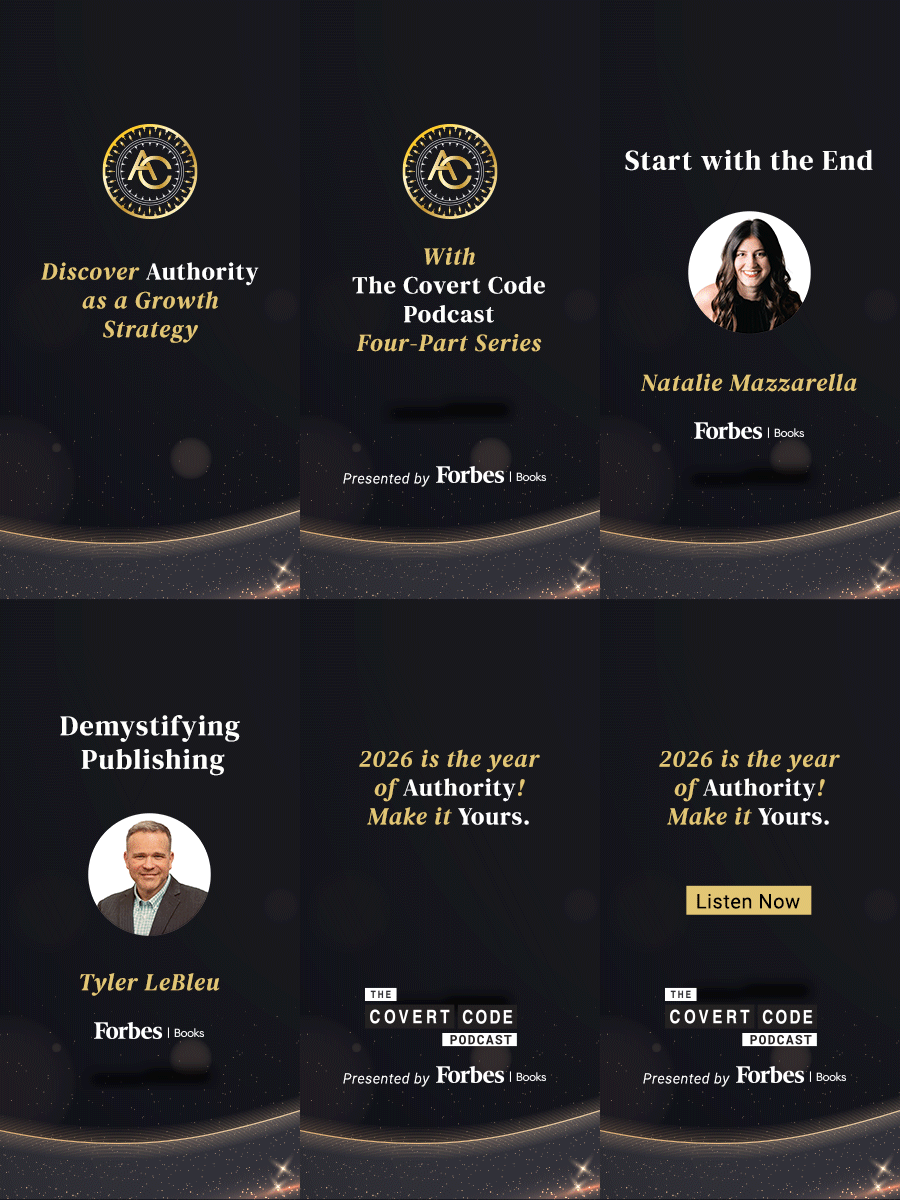
The Covert Code Launches “Authority as a Growth Strategy” A Forbes Books special podcast series presented by The Covert Code

By |2026-05-22T23:26:55+00:00April 7th, 2026|In The Media, Press Releases|

Authority as a Growth Strategy is the foundation behind building credibility, influence, and long-term business success in today’s competitive marketplace.

Authority as a Growth Strategy podcast cover by The Covert Code featuring leadership, branding, and digital marketing insightsNew four-part series explores authorship, thought leadership, and authority building for CEOs and C-suite leaders

The Covert Code podcast has launched a new four-part educational series titled “Authority as a Growth Strategy” featuring senior executives from The Authority Company, the parent company of Forbes Books.

The series delivers strategic insight for CEOs, entrepreneurs, and C-suite leaders seeking to build authority, expand visibility, and convert thought leadership into measurable business growth.

As executive visibility increasingly affects enterprise valuation, strategic partnerships, recruiting leverage, and customer trust, “Authority as a Growth Strategy” explores how leaders can intentionally develop authority as a competitive business asset. 

Executive Authority in the Modern Marketplace

The “Authority as a Growth Strategy” series brings together The Authority Company’s senior leadership team for in-depth conversations on authorship strategy, publishing excellence, media positioning, and brand expansion.

Each episode provides actionable frameworks designed to help leaders move beyond passive visibility and toward intentional authority building.

Featured executives include:

Beth LaGuardia Cooper, President & Chief Marketing Officer, The Authority Company

Beth LaGuardia Cooper oversees brand strategy, public relations, and marketing operations across Advantage Media Group. Cooper, with her experience in leading performance-driven marketing initiatives, discusses the strategic engineering of executive authority to create sustained market credibility.

Episode 1: She examines “The Big Picture”—How authority, trust, and visibility are reshaping the way leaders grow in an AI-driven world.

  • The intersection of brand clarity and authority positioning
  • How media visibility drives business outcomes
  • The role of long-term reputation strategy in executive growth

Natalie Mazzarella, Vice President of Authority Brand Building

Natalie Mazzarella leads the strategic expansion of Advantage Media’s media services, helping authors transform their ideas into scalable personal brands.

Episode 2 covers “Authority Brand Building” –   Becoming the Face of Your Brand

  • Building an integrated authority ecosystem
  • Leveraging media, speaking engagements, and digital platforms
  • Turning thought leadership into sustained influence

Tyler LeBleu, Senior Vice President of Publishing

Tyler LeBleu oversees the full publishing lifecycle for authors, directing writing & editorial, production, creative design, and supply chain operations.

In Episode 3 Tyler focuses on “Demystifying the Publishing “Process”—Accelerating Your Authority Journey.

  • What distinguishes a strategic business book from a vanity project
  • Publishing processes that reinforce credibility
  • How execution quality impacts long-term authority

Terry Stanton, Authority Strategy Executive

Terry Stanton helps global and personal brands design visibility strategies that elevate influence. Her background spans public relations, marketing strategy, SEO writing, video production, and broadcast journalism.

In Episode 4, Terry discusses “Brand Building”—Start With the End in Mind: Designing Your Authority Journey

  • Tactical strategies for translating executive expertise into thought leadership
  • Insights on integrating traditional media with digital platforms
  • Frameworks for building scalable authority assets

Why Authority Matters Now

In an era of rapid content creation and AI-generated information, credibility has become both more fragile and more valuable. The “Authority as a Growth Strategy” podcast series addresses the growing demand among executives to control their narrative and differentiate in competitive markets.

The series is distributed across YouTube and major podcast platforms and is supported by short-form digital content designed to expand reach nationwide.

“Authority is not accidental—it’s strategic capital,” said Anna Covert, host of The Covert Code. “When leaders approach authorship and media intentionally, they build influence that compounds over time.”

The “Authority as a Growth Strategy” series is now streaming on The Covert Code podcast

Comments Off on The Covert Code Launches “Authority as a Growth Strategy” A Forbes Books special podcast series presented by The Covert Code

Episode 110 – Maria Garaitonandia

By |2026-04-21T01:49:44+00:00April 2nd, 2026|Podcasts|

Maria Garaitonandia on How High-Performing Teams Talk When No One’s Watching

maria garaitonandia professional headshot leadership coach communication strategist Untangling Communication Covert Code podcast guest

Communication doesn’t typically break in a single moment.

It drifts.

It softens.
It gets avoided.
It goes unspoken.

And by the time leaders recognize it, the impact is already showing up—in slower decisions, misalignment, and quiet tension across teams.

In this episode of The Covert Code Podcast, Anna Covert sits down with Maria Garaitonandia, leadership coach, communication strategist, and author of Untangling Communication, to explore how communication breaks down before anyone says a word.

This isn’t about obvious conflict.

This episode delves into the underlying dynamics of communication, specifically the conversations that often go unspoken.


Who Is Maria Garaitonandia?

Maria Garaitonandia is a leadership communication strategist with over 20 years of experience working with global teams across the U.S., Latin America, and Europe.

She helps leaders restore the following:

• Clarity
• Trust
• Alignment
• Momentum

Her work focuses on the moments where communication isn’t broken—but isn’t flowing.

Because that’s where problems actually begin.


The Silent Start of Communication Breakdown

One of the most powerful insights from this conversation:

👉 Communication issues don’t start with conflict.
👉 They start with avoidance.

Leaders often assume everything is fine because no one is speaking up.

But in reality:

• Conversations are being delayed
• Feedback is being softened
• Misalignment is growing quietly

The absence of conflict doesn’t mean alignment.

It often means the opposite.


Where Misalignment Shows Up First

Before teams openly acknowledge problems, misalignment manifests in subtle ways:

• Meetings that feel unclear
• Decisions that don’t stick
• Teams that agree publicly but hesitate privately
• A lack of forward momentum

These signals are simple to ignore.

But over time, they compound into bigger issues that are harder to fix.


Why Leaders Avoid Difficult Conversations

Avoidance isn’t random.

It’s driven by intention—just not always the right kind.

Leaders avoid conversations because they want to:

• Preserve relationships
• Avoid tension
• Maintain stability
• Protect team morale

But what feels like protection often creates long-term friction.

Because what isn’t addressed doesn’t disappear.

It builds.


The Real Cost of Communication Drift

When communication issues linger, the cost is both visible and invisible.

On the surface:

• Slower execution
• Missed opportunities
• Reduced clarity

Beneath the surface:

• Eroded trust
• Frustration
• Disengagement

Maria emphasizes that communication challenges are usually about more than just what’s being said.

They’re about what isn’t being said.


Culture Shapes Communication

Every organization has unspoken rules.

These rules determine:

• What people feel safe saying
• What gets filtered out
• Who speaks up—and who stays silent

Maria’s global experience shows that across cultures, one thing remains consistent:

People adjust their communication based on perceived safety—not truth.


Rebuilding Trust and Clarity

The positive news?

Communication can be restored.

But it requires leaders to take intentional action.

That starts with:

• Naming what’s been avoided
• Creating space for honest dialogue
• Modeling transparency
• Resetting expectations

Trust isn’t built through perfect communication.

It’s built through honest communication.


The One Shift That Changes Everything

If there’s one takeaway from this episode, it’s this lesson:

👉 Leaders don’t need better scripts.
👉 They need better awareness.

The willingness to notice what feels “off” and address it early can immediately restore clarity and momentum.

Because high-performing teams aren’t the ones without tension.

They’re the ones that know how to move through it.


Connect with Maria Garaitonandia

Website: https://www.mariagaraitonandia.com/
YouTube: https://www.youtube.com/@MariaGaraitonandia
Instagram: https://www.instagram.com/mariagaraitonandia/
Facebook: https://www.facebook.com/globalbridgestraining
LinkedIn: https://www.linkedin.com/in/mariagaraitonandia/

Comments Off on Episode 110 – Maria Garaitonandia

Episode 106 – Sam Frentzel-Beyme

By |2026-04-28T10:17:49+00:00March 6th, 2026|Podcasts, Speaker|

Sam Frentzel-Beyme on Simplifying Growth Through Unified Systems

Growth is often portrayed as complex—layers of marketing tools, disconnected data systems, and endless workflows that slow teams down instead of moving them forward.

But according to Sam Frentzel-Beyme, growth doesn’t have to feel that way.

In this episode of The Covert Code Podcast, Anna Covert sits down with Sam Frentzel-Beyme, Founder of Stellant, to explore how organizations can simplify growth by aligning brand, marketing, and technology into one unified system.

With a career that includes working with organizations like Google, Pepsi, and Johnson & Johnson, Sam has spent more than two decades helping companies navigate the growing complexity of modern business systems.

His mission today: help organizations replace fragmented systems with unified strategies that drive real transformation.


Who Is Sam Frentzel-Beyme?

Sam Frentzel-Beyme is the founder of Stellant, a platform designed to integrate brand strategy, marketing operations, and AI-powered execution into a single growth framework.

Throughout his career, Sam has worked with some of the world’s most recognized organizations, helping them align brand, marketing, and technology to create scalable systems that support long-term growth.

What he discovered across industries was a surprisingly consistent challenge.

Organizations weren’t failing because they lacked ideas or ambition.

They were struggling because their systems weren’t working together.


The Hidden Cost of Disconnected Systems

Many organizations unknowingly create growth barriers by allowing different departments to operate independently.

Marketing tools don’t connect with brand strategy.
Technology teams build infrastructure without marketing alignment.
Leadership lacks visibility into how systems interact.

The result is fragmentation.

According to Sam Frentzel-Beyme, this fragmentation creates unnecessary complexity that slows growth and creates inefficiencies across the organization.

When systems are disconnected, teams spend more time managing processes than driving results.


Why Sam Founded Stellant

After years of consulting with organizations across industries, Sam recognized a major opportunity.

Companies didn’t need more tools.

They needed better integration.

That insight led him to create Stellant, a platform designed to unify brand, marketing, and operational systems into one cohesive growth engine.

Instead of managing multiple disconnected platforms, Stellant allows organizations to bring strategy and execution into alignment.

The goal is simple: remove complexity so growth can happen more naturally.


AI and the Future of Growth Systems

Artificial intelligence is transforming the way companies operate, but Sam believes the most successful organizations will be those that combine AI with human expertise.

AI can accelerate execution by:

• Automating workflows
• Analyzing large data sets
• Identifying patterns in customer behavior
• Supporting faster decision-making

But leadership, creativity, and strategy still rely on human insight.

Sam sees the future of growth as a collaboration between AI-powered systems and human-driven strategy.

Organizations that embrace this balance will have a major advantage in the evolving business landscape.


For-Profit vs Nonprofit Growth Challenges

Sam’s work spans both corporate and nonprofit organizations, giving him a unique perspective on how different sectors approach growth.

For-profit companies often struggle with scale and operational complexity.

Nonprofits frequently face limited resources and infrastructure.

Yet both face the same fundamental challenge: aligning strategy with execution.

By simplifying systems and creating unified workflows, organizations in both sectors can improve efficiency and focus more energy on achieving their mission.

Simplifying Growth for the Future

As technology continues to evolve, organizations are adopting more tools than ever before.

But more tools don’t automatically lead to better outcomes.

Sam Frentzel-Beyme believes the future belongs to organizations that simplify—not complicate—their growth systems.

By aligning brand strategy, marketing operations, and AI-enabled technology, companies can create scalable systems that support sustainable growth.

And in today’s rapidly changing marketplace, that clarity may be the greatest competitive advantage of all.

📖 GET THE BOOK: The Covert Code—Mastering the Art of Digital Marketing Amazon: https://rb.gy/wrht8 Barnes & Noble: https://rb.gy/vwev0a Target: https://rb.gy/jhpxri

✨ CONNECT WITH SAM FRENTZEL-BEYME Stellant: https://stellant.io LinkedIn:   / samfrentzelbeyme  

🎧 LISTEN ON ALL PLATFORMS: Spotify: https://open.spotify.com/show/0UcnL4g… Apple Podcasts: https://podcasts.apple.com/us/podcast… Amazon Music: https://music.amazon.com/podcasts/d15… iHeart Radio: https://www.iheart.com/podcast/269-th… YouTube Music:    / @thecovertcodepodcast   🌐 FOLLOW THE COVERT CODE Website: https://thecovertcode.com/ Instagram:   / covertcodeofficial   Facebook:   / thecovertcode   LinkedIn:   / covert-code-official  

Comments Off on Episode 106 – Sam Frentzel-Beyme

Episode 105 – Jan Kaeo

By |2026-03-14T02:48:01+00:00February 27th, 2026|In-Person, Podcasts, Speaker|

Jan Kaeo on Unlocking Your Team’s Potential Through Leadership, Trust, and Communication

Great teams are not created by chance.

They are built intentionally—through leadership, trust, communication, and confidence.

In this episode of The Covert Code Podcast, host Anna Covert sits down with Jan Kaeo, Principal, Owner, and Master Trainer at Dale Carnegie Training Hawaii & Guam, to explore how leaders can unlock their team’s potential using time-tested, human-centered techniques that still work in today’s fast-paced workplace.

Based in Honolulu, Jan Kaeo has spent more than 14 years helping individuals and organizations build confident leaders, engaged teams, and measurable results. Her work bridges classic leadership principles with modern workplace realities—from rapid change to remote teams to generational shifts.

This conversation is practical, grounded, and deeply relevant for leaders at every level.

Who Is Jan Kaeo?

Jan Kaeo is the Principal, Owner, and Master Trainer at Dale Carnegie Training Hawaii & Guam. She works with organizations across industries to develop leadership capability, improve communication, and strengthen team engagement.

Her focus isn’t surface-level motivation. It’s transformation.

Jan Kaeo helps leaders:

  • Build authentic confidence

  • Strengthen trust during uncertainty

  • Improve team performance

  • Increase engagement

  • Create sustainable cultural change

What Holds Teams Back the Most?

According to Jan Kaeo, the biggest thing holding teams back isn’t talent.

It’s trust.

When trust erodes—whether through poor communication, inconsistent leadership, or lack of psychological safety—performance follows. Leaders often underestimate how quickly disengagement spreads.

Jan emphasizes that high-performing teams are built when leaders:

  • Communicate clearly and consistently

  • Show genuine interest in their people

  • Follow through on commitments

  • Create space for open dialogue

The Leadership Mistake That Shows Up Everywhere

One common leadership mistake Jan Kaeo sees across industries?

Leaders assume their title equals influence.

It doesn’t.

Authority may grant position. Influence is earned.

Jan explains that effective leadership is built on:

  • Credibility

  • Consistency

  • Emotional intelligence

  • Authentic connection

When leaders skip those foundations, engagement drops—regardless of the industry.

Confidence: The Hidden Driver of Effective Leadership

Confidence isn’t arrogance.

It’s clarity.

Jan Kaeo shares that authentic confidence comes from preparation, self-awareness, and consistent action—not from pretending to have all the answers.

Leaders build confidence by:

  • Practicing communication skills

  • Seeking feedback

  • Taking ownership of mistakes

  • Investing in growth

When leaders model growth, teams follow.

Communication: The Multiplier of Performance

Communication isn’t just about delivering information. It’s about creating understanding.

Jan explains that leaders often miss the mark when they:

  • Over-communicate direction but under-communicate purpose

  • Fail to listen

  • Avoid difficult conversations

  • Deliver feedback without context

High-performing teams thrive when communication is:

  • Transparent

  • Purpose-driven

  • Two-way

  • Respectful

Unlocking Potential in People Who Don’t See It Themselves

One of the most powerful moments in this episode centers around helping individuals discover their potential.

Jan Kaeo believes people rise when leaders:

  • Recognize strengths publicly

  • Provide specific encouragement

  • Offer stretch opportunities

  • Reinforce belief consistently

Often, people don’t lack potential—they lack someone who sees it and names it.

The One Shift Leaders Can Make Today

If you’re looking for one immediate improvement, Jan’s advice is simple:

Be intentionally present.

Engagement improves when leaders:

  • Listen without distraction

  • Ask thoughtful questions

  • Show appreciation regularly

  • Connect purpose to performance

Small behavioral shifts create big cultural outcomes.

The Future of Leadership

Looking ahead, Jan Kaeo believes leaders will need:

  • Adaptability

  • Emotional intelligence

  • Communication mastery

  • Confidence under pressure

  • A human-first approach

Technology may evolve. But leadership remains deeply human.

Connect With Jan Kaeo

To learn more about Jan Kaeo and her work with Dale Carnegie Training Hawaii & Guam, connect with her on LinkedIn and explore leadership development opportunities in Hawaii and Guam.

GET THE BOOK: The Covert Code—Mastering the Art of Digital Marketing Amazon: https://rb.gy/wrht8 Barnes & Noble: https://rb.gy/vwev0a Target: https://rb.gy/jhpxri

✨ CONNECT WITH JAN KAEO, Dale Carnegie Training Hawaii & Guam: https://www.dalecarnegie.com/en/locat… LinkedIn:   / jankaeo  

LISTEN ON ALL PLATFORMS: Spotify: https://open.spotify.com/show/0UcnL4g… Apple Podcasts: https://podcasts.apple.com/us/podcast… Amazon Music: https://music.amazon.com/podcasts/d15… iHeart Radio: https://www.iheart.com/podcast/269-th… YouTube Music:    / @thecovertcodepodcast  

FOLLOW THE COVERT CODE: Website: https://thecovertcode.com/ Instagram:   / covertcodeofficial   Facebook:   / thecovertcode   LinkedIn:   / covert-code-official  

Comments Off on Episode 105 – Jan Kaeo

Episode 104 – Luke Hillman

By |2026-03-14T02:41:53+00:00February 20th, 2026|In-Person, Podcasts|

Luke Hillman on Turning Sustainability Into 7.7 Million Views (And Why Authentic Content Wins)

Going viral isn’t a strategy.

But authenticity is.

In this episode of The Covert Code Podcast, Annika sits down with Luke Hillman, social media manager for Altitude Water, to unpack how a raw, unscripted video about atmospheric water generation exploded to 7.7 million views—and what it reveals about the future of sustainability marketing.

Luke didn’t start with a marketing plan.

He started by yelling at parking lots.

Who Is Luke Hillman?

Luke Hillman is a sustainability-focused content creator and social media manager for Altitude Water. His niche? Off-grid living, urban infrastructure, passive design, clean water systems, and exposing environmental inefficiencies in everyday life are all important aspects of sustainable living.

Before going viral, Luke started by:

  • Posting sustainability videos organically

  • Breaking down complex topics into simple, digestible content

  • Rejecting overly scripted “corporate” marketing

  • Speaking directly and authentically

No paid media.
No agency playbook.
No hashtag strategy obsession.

Just consistency and conviction.

The Viral Moment: 7.7 Million Views

The breakthrough video?

Luke filmed himself standing next to an Altitude Water atmospheric water generator, explaining:

  • The machine produces 10 gallons of water per day

  • It pulls water directly from air

  • It solves real water contamination problems

  • Nobody is talking about it

The key?

He wasn’t selling.

He was reacting.

Authenticity beats optimization.

Luke didn’t:

  • Script the content

  • Over-engineer hashtags

  • Post at “perfect” times

  • Follow social media marketing “rules.”

He simply spoke like he would to a friend.

And the algorithm rewarded engagement.

Why This Worked: The Psychology of Pull Marketing

This wasn’t push marketing.

It was pull.

People are increasingly searching for:

  • Clean water solutions

  • Non-toxic lifestyles

  • Sustainable infrastructure

  • Grid independence

  • Off-grid systems

Luke tapped into an existing emotional undercurrent:
Younger generations are anxious about environmental degradation.

When content feels real, it spreads.

The Water Crisis Angle

Luke shares powerful context:

  • 80% of Florida’s drinkable water comes from one aquifer

  • Only 4 springs remain uncontaminated

  • Leachate from landfills pollutes groundwater

  • Forever chemicals (PFAS) are nearly irreversible

Altitude Water’s atmospheric water generation Solution:

  • Pulls water from air

  • Mineralizes it for proper hydration

  • Reduces reliance on contaminated supply systems

  • Provides off-grid resilience

The conversation goes deep into:

  • Why distilled water alone isn’t enough

  • The role of mineral infusion

  • Why bottled water is largely marketing-driven

  • The overlooked risk of infrastructure corrosion

Sustainability + Creator Economy = The New Influence Model

Luke makes a powerful point:

Traditional social media marketing agencies struggle because they optimize for appearance.

But people want:

  • Raw language

  • Honest reactions

  • Relatable delivery

  • Passive learning

  • Creator-first storytelling

He emphasizes:

  • Don’t overthink captions

  • Don’t overuse hashtags

  • Consistency > Perfection

  • Engagement > polish

TikTok’s transcription-based distribution means:
Your spoken words matter more than your tag strategy.

What’s Next for Luke Hillman?

Luke’s vision goes far beyond virality.

He wants to build:

  • Solar-powered communities

  • Atmospheric water-integrated housing

  • Passive solar design developments

  • Regenerative agriculture neighborhoods

  • Sustainable “solar punk” ecosystems

He’s studying Japan, Singapore, Germany, and the Netherlands for models of:

  • Public transport integration

  • Water capture systems

  • Urban sustainability

  • Decentralized infrastructure

His belief:

We don’t lack technology.
We lack political will.

The Bigger Question

If 7.7 million people watched a video about atmospheric water generation…

Are we finally ready for sustainability to go mainstream?

📖 GET THE BOOK: The Covert Code—Mastering the Art of Digital Marketing on Amazon: https://rb.gy/wrht8 Barnes & Noble: https://rb.gy/vwev0a Target: https://rb.gy/jhpxri ✨ CONNECT WITH LUKE HILLMAN Instagram: @lukestoptalking Email: Luke@thehillmans.com Altitude Water: https://altitudewaterusa.com 🎧 LISTEN ON ALL PLATFORMS Spotify: https://open.spotify.com/show/0UcnL4g… Apple Podcasts: https://podcasts.apple.com/us/podcast… Amazon Music: https://music.amazon.com/podcasts/d15… iHeart Radio: https://www.iheart.com/podcast/269-th… YouTube Music:    / @thecovertcodepodcast   🌐 FOLLOW THE COVERT CODE Website: https://thecovertcode.com/ Instagram:   / covertcodeofficial   Facebook:   / thecovertcode  LinkedIn:   / covert-code-official  

Comments Off on Episode 104 – Luke Hillman

Anna Covert to Headline Quantcast Breakfast Byte in New York

By |2026-02-19T03:20:21+00:00February 13th, 2026|Press Releases|

Forbes author and digital strategist to speak on modern marketing mastery

Honolulu, HI—October 10, 2024—Digital marketing strategist and Forbes author Anna Covert will take the stage at Quantcast’s upcoming Breakfast Byte event on October 17 from 9:00 to 11:00 AM in the Farnsworth Room at The Beekman Hotel in New York City.

The educational networking session will spotlight Covert’s newest book, The Covert Code: Mastering the Art of Digital Marketing, and explore what truly separates high-performing digital marketers from the rest.

During her presentation, Covert will guide attendees through the mindset, strategy, and infrastructure required to compete in today’s rapidly evolving digital environment. Instead of talking about surface-level strategies, she will talk about the deeper questions that business owners and marketing leaders need to ask themselves in order to grow their businesses in a way that is both scalable and long-lasting.

Inside The Covert Code

Drawing from more than 20 years of hands-on industry experience, Covert distills lessons learned while working with major brands such as SunPower and Panasonic into a practical framework for navigating the digital marketplace.

The book provides:

  • Strategic guidance on selecting and managing marketing partners

  • Insights into building efficient, high-performing campaigns

  • Tools for maximizing return on marketing investment

  • Clear warnings about common industry pitfalls

Each chapter builds toward a structured roadmap for establishing a durable digital presence—one that balances ambition with accountability.

Real-world case studies from Covert Communication further demonstrate how companies across industries have implemented these strategies to generate measurable results.

Beyond the Book: Ongoing Thought Leadership

In addition to the book, Covert contributes regularly to Forbes with monthly articles addressing emerging digital trends. Recent topics include:

  • Are We Approaching the End of the Data Age?

  • FOMO and AI: Do You Have Fear of Missing Out?

Her thought leadership also extends to The Covert Code Podcast, where she interviews founders, marketers, and industry leaders—often with a special emphasis on the solar sector. The podcast blends practical education with energetic, candid conversation, offering both inspiration and tactical insight.

A Mission to Simplify Digital Complexity

“My goal has always been to help business leaders make confident decisions in an increasingly complex digital landscape,” Covert shared. “Marketing platforms will continue to evolve—but clarity, discipline, and strategic thinking remain timeless.”

Comments Off on Anna Covert to Headline Quantcast Breakfast Byte in New York

Episode 103 – David Blivin

By |2026-02-13T23:32:31+00:00February 13th, 2026|Author, Podcasts|

David Blivin on Why Great Ideas Don’t Need Silicon Valley to Succeed

Great ideas don’t live exclusively in Palo Alto.

They live in research parks, national labs, university basements, and founder brains—everywhere. What’s unevenly distributed isn’t innovation. It’s money and management.

In this episode of The Covert Code Podcast, host Anna Covert sits down with David Blivin, founder and managing director of Cottonwood Technology Funds and author of Crossing the Cactus, to unpack what it really takes to commercialize innovation outside of traditional tech hubs.

David Blivin has spent decades investing in early-stage technology—starting in the Research Triangle Park ecosystem, building one of the largest funds in the I-85 corridor, and later launching Cottonwood in the Southwest with a focus on “hard tech”—science-backed innovations that can be patented, protected, and manufactured.

This conversation is a roadmap for founders, investors, and economic development leaders who believe the next big breakthroughs won’t come from the usual ZIP codes.

Who Is David Blivin?

David Blivin is the founder and managing director of Cottonwood Technology Funds, an early-stage venture firm focused on hard tech—materials, semiconductor innovation, electric motors, health tech, and other science-based breakthroughs that require more than a pitch deck to prove.

He began his career in accounting and finance, earned his MBA at Duke, and entered venture capital after seeing a major problem firsthand: regions full of innovation but short on the kind of capital and expertise startups need to scale.

That gap became the mission.

The Big Idea: Innovation Is Everywhere—Capital and Management Aren’t

One of David Blivin’s clearest points is also the most important:

Great ideas are everywhere. What’s not everywhere is money and management.

In other words, if your region wants real economic diversification through tech commercialization, it can’t stop at supporting research. It has to solve for the full triangle:

  1. Ideas (usually abundant)

  2. Money (often scarce locally)

  3. Management (the hardest to build and keep)

David Blivin contends that the building of successful ecosystems occurs when these three elements consistently connect, not sporadically.

Why Venture Capital Shifted Away From Hard Tech (and Why It’s Coming Back)

David Blivin explains a key venture trend that founders feel every day: VC moved heavily toward software because it’s faster and cheaper to scale.

  • Software can test markets quickly

  • Scaling doesn’t require manufacturing

  • Exits can happen earlier

  • Capital requirements are lower

Hard tech is different. Manufacturing is real. Supply chains matter. Prototypes take time. Later investors want proven execution and experienced operators.

But David also points out something that’s easy to forget in AI hype cycles:

You still need “things.”

AI needs chips. Data centers need power efficiency. Quantum needs hardware. The “internet of things” still requires physical devices.

That’s why investors are starting to re-engage with hard tech again—because the future isn’t only digital. It’s physical.

The Book: Crossing the Cactus and the Ecosystem Problem Nobody Wants to Solve

In Crossing the Cactus, David Blivin lays out a practical roadmap for commercializing innovation beyond Silicon Valley—with a focus on what states, cities, and countries can actually do if they want startups to launch and stay.

He shares an issue that quietly drains entire regions:

Universities and national labs license valuable IP… and it leaves the state.

Even when brilliant research originates locally, it often gets commercialized somewhere else because the capital and business talent aren’t nearby.

The result: the idea becomes a product, but not in the place that created it.

“Money Follows Management” vs “Management Follows Money”

This is one of the most useful frameworks in the entire episode.

David Blivin says the traditional venture mantra is:

Money follows management.

That works in places like Silicon Valley and Boston—where experienced startup executives are everywhere.

But in under-resourced ecosystems, David flips it:

Management follows money.

If early capital is meaningful enough, it becomes a magnet that attracts the operators who know how to build companies. But the catch is this: many regions don’t invest enough early to recruit real business leadership.

And without a business leader, hard tech companies struggle to raise the next round—because later investors want to see someone who has scaled before.

The Hard Truth About People

David Blivin shares a striking pattern from his investing experience:

When startups recruit top CEO talent from outside the region, those leaders often don’t move—and eventually, the company moves to where the CEO’s network is.

That’s why “people strategy” is the missing piece in economic development conversations.

Buildings don’t create jobs.
People do.

And if regions want to keep innovation local, they have to create incentives that make it rational for executives and builders to plant roots—not just fly in quarterly.

David Blivin’s Advice for Founders Raising Early Capital

For founders with big ideas, David Blivin offers grounded advice:

  • Establish a strong legal and advisory network, as a lawyer with connections to the venture ecosystem can facilitate access to early capital.

  • Build enough proof (prototype, demo, MVP) to be “presentable.”

  • Talk to customers early—make sure you’re solving a need-to-have, not a nice-to-have.

  • Don’t assume “1% of a huge market” is easy—no one gives away market share.

  • If you’re technical, find your business counterpart—someone who can translate value, pricing, competitive landscape, and go-to-market strategy.

The message is simple: breakthrough tech needs breakthrough execution.

Connect with David Blivin

David Blivin is the founder and managing director of Cottonwood Technology Funds and the author of Crossing the Cactus, a practical guide for commercializing innovation and building sustainable tech ecosystems beyond traditional hubs.

To learn more, reach out via Cottonwood Technology Funds.

Comments Off on Episode 103 – David Blivin
Go to Top