
Most business owners spend years building their companies.
Far fewer spend time preparing to eventually leave them.
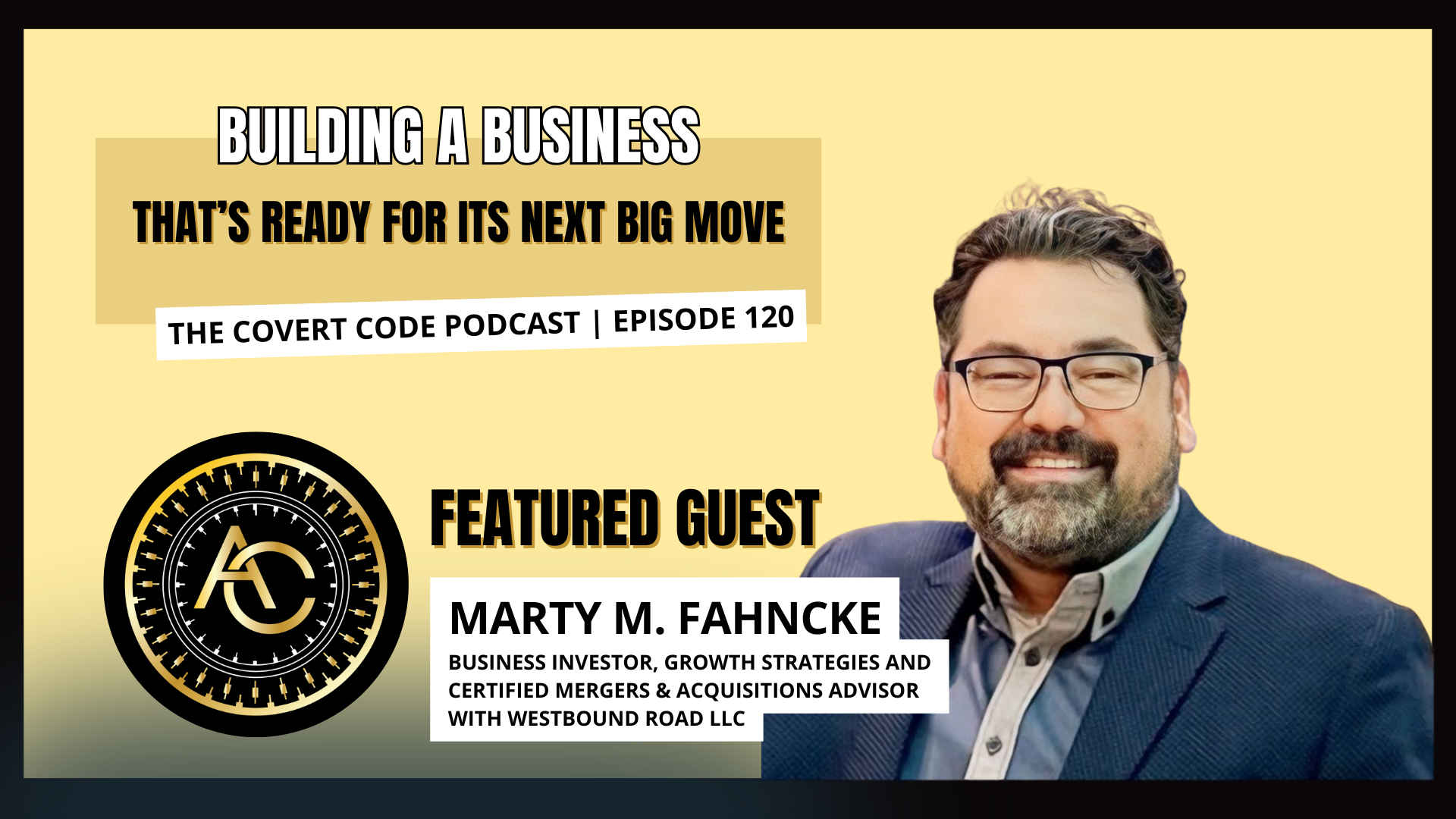
On this episode of The Covert Code Podcast, I sat down with Certified Merger & Acquisition Advisor Marty Fahncke to discuss one of the most overlooked aspects of entrepreneurship: preparing your business for a successful exit.
Whether you plan to sell your company next year or twenty years from now, Marty believes every business owner should begin building with the end in mind. His experience advising companies through more than $500 million in mergers and acquisitions has shown him that businesses prepared for sale are often healthier, more profitable, and ultimately worth significantly more.
Exit Planning Starts Earlier Than You Think
One of the biggest misconceptions Marty sees is that exit planning begins when an owner decides to retire.
In reality, the process should begin years before a business ever goes to market.
The systems you build, the financial records you maintain, the management team you develop, and the relationships you create all contribute to the eventual value of your company.
Businesses that rely entirely on their founder are often much harder to sell because buyers aren’t simply purchasing products or services—they’re purchasing a system that can continue operating without the owner.
This idea aligns closely with many of the growth strategies we discuss on The Covert Code Podcast. Strong businesses are built on systems, documentation, and leadership—not dependency.
The Four Stages of Owner Exit
Marty explained that exiting a business doesn’t always mean selling it outright.
Owners have several options depending on their personal goals, financial objectives, and succession plans.
Some choose to sell to strategic buyers. Others transition ownership to family members, employees, or business partners. Some gradually step away while maintaining partial ownership.
The important point is having a plan before circumstances force one upon you.
Why Clean Financials Matter
One of the strongest messages from our conversation centered on financial transparency.
Many entrepreneurs attempt to minimize taxable income throughout the life of their business. While that may reduce taxes in the short term, it can also reduce the perceived value of the business during an acquisition.
Potential buyers evaluate financial performance carefully.
The cleaner and more organized your records are, the easier it becomes for buyers to understand the true earning potential of the business.
Preparing accurate financial statements years before selling can significantly increase buyer confidence.
Building a Company Buyers Want
Buyers aren’t simply purchasing revenue.
They’re purchasing predictable systems, reliable employees, repeatable processes, loyal customers, and future opportunities.
Marty shared that businesses become dramatically more valuable when they can operate without the owner’s daily involvement.
That requires documentation, delegation, leadership development, and scalable systems.
It’s one reason digital infrastructure has become increasingly important. Through our work at Covert Communication, we’ve seen firsthand how organized CRMs, marketing automation, analytics, and digital assets can strengthen a company’s overall value.
Growth Through Acquisition
While many entrepreneurs focus exclusively on organic growth, Marty discussed the strategic role acquisitions can play.
Buying complementary businesses can accelerate expansion, increase market share, and strengthen competitive positioning.
Successful acquisitions, however, require careful due diligence, cultural alignment, and a clear integration strategy.
Growth should never come at the expense of operational stability.
How AI May Impact Business Valuations
Artificial intelligence has become a recurring topic on The Covert Code Podcast, and this episode was no exception.
Marty believes AI will increasingly help buyers evaluate businesses by improving financial analysis, identifying operational risks, and streamlining due diligence.
At the same time, AI will likely reward companies with well-documented processes and organized data while exposing operational weaknesses that previously went unnoticed.
Owners who embrace technology today may find themselves better positioned for tomorrow’s acquisitions.
Build a Better Business by Building a Saleable Business
Perhaps the most valuable lesson from our conversation was this:
You don’t build a saleable business because you plan to sell.
You build a saleable business because it becomes a better business.
Companies with strong systems, healthy financials, documented processes, empowered leadership, and clear strategic direction perform better regardless of whether they are ever sold.
Preparing for an exit ultimately prepares your company for long-term success.
Listen to the Full Episode
To hear my full conversation with Marty Fahncke about exit planning, mergers and acquisitions, business valuation, and building a company buyers want, listen to this episode of The Covert Code Podcast.
You can learn more about Marty at Westbound Road, connect with him on LinkedIn, or follow him on Facebook.
🎧 LISTEN ON ALL PLATFORMS:
Spotify: https://open.spotify.com/show/0UcnL4g4J2DckqMpZg4DdB?si=NKAFJcRMSdOJlP5iebBxoA&nd=1&dlsi=50d6d5c5753a499b
Apple Podcasts: https://podcasts.apple.com/us/podcast/the-covert-code/id1733326615
Amazon Music: https://music.amazon.com/podcasts/d15bb709-a4df-43bb-9284-9e479c8574a7/the-covert-code
iHeart Radio: https://www.iheart.com/podcast/269-the-covert-code-269144900/
YouTube Music: https://music.youtube.com/channel/UCSU2Anqu1_yzb_D6IFd7i_Q
🌐 FOLLOW THE COVERT CODE:
Website: https://thecovertcode.com/
Instagram: https://www.instagram.com/covertcodeofficial
Facebook: https://www.facebook.com/thecovertcode
LinkedIn: https://www.linkedin.com/company/covert-code-official/
📚 ABOUT HOST ANNA COVERT:
Anna Covert is the host of The Covert Code Podcast and the author of The Covert Code – Mastering the Art of Digital Marketing and The Solar Coaster. With over two decades of experience in digital marketing and business strategy, Anna has worked with top-tier companies like Microsoft, Apple, and IBM and leads Covert Communication, Hawaii’s largest digital agency.
ANNA’S WEBSITES:
The Covert Code: https://thecovertcode.com/
Anna Covert: https://annacovert.com/
Covert Communication: https://covertcommunication.com/
Reactium: https://reactium.io/
⚠️ Affiliate Disclosure: Some links included may be affiliate links, which means we may earn a commission if you choose to make a purchase through them at no additional cost to you.
Transcript: Selling Your Business in Style — How to Maximize Value Before You Exit
Episode: The Covert Code Podcast
Host: Anna Covert
Guest: Marty Fahncke
Anna Covert [00:00:04]: Aloha. My name is Anna Covert, and I'm coming to you from my battleship here on the beautiful island of Oahu.
Anna Covert [00:00:12]: This week on The Covert Code Podcast, the topic is Selling Your Business in Style.
Anna Covert [00:00:18]: My very special guest is Marty Fahncke. He is a business investor, growth strategist, Certified Merger & Acquisition Advisor with Westbound Road LLC, and has more than 30 years of experience helping companies grow, scale, and ultimately sell.
Anna Covert [00:00:38]: Marty has worked with hundreds of companies that have collectively generated more than one billion dollars in revenue and has personally participated in over five hundred million dollars in mergers and acquisitions.
Anna Covert [00:00:52]: In his Amazon bestselling book, Boomers Sell the Business, he shares practical strategies business owners can use to increase the value of their companies before, during, and after an acquisition.
Anna Covert [00:01:02]: Marty, thank you so much for joining me today.
Marty Fahncke [00:01:05]: Thanks for having me. I'm excited to be here. I listened to a few episodes of your podcast, and I love the way you pull information out of your guests. I'm looking forward to sharing some great ideas today.
Anna Covert [00:01:18]: Thank you. Before we begin, if you're enjoying The Covert Code Podcast, please subscribe. We recently surpassed 200,000 subscribers, and that's because of you and your aloha. Let's dive in.
From Marketing to Mergers & Acquisitions
Anna Covert: We always begin with the Cliff Notes version. Tell us how you got from where you started to where you are today.
Marty Fahncke: I've spent most of my career in marketing. About twenty-five years ago I partnered with two other people and we started a business together. Roughly eighteen months later, someone offered us $1.5 million in cash for that business.
Marty Fahncke: At the time, we thought we were the smartest people in the world.
Marty Fahncke: Looking back, I later realized we had left nearly $24 million on the table because we didn't understand who was buying us, why they wanted the business, or how to properly negotiate the transaction.
Marty Fahncke: A few years later I was on the opposite side of the table. I had launched one of the early e-commerce businesses around 2000, and one of our competitors kept getting in our way.
Marty Fahncke: My CEO simply said, "Why don't you buy them?"
Marty Fahncke: I didn't even know what that process looked like, but I made the call. They wanted to sell.
Marty Fahncke: Our company was doing about $1.5 million in revenue. Their company was doing roughly $2 million. After acquiring and combining the businesses, our second-year revenue reached nearly $30 million.
Anna Covert: That's incredible.
Marty Fahncke: That experience taught me the incredible power of strategic acquisitions. One plus one doesn't always equal two. Sometimes one plus one equals eleven if you do it correctly.
Marty Fahncke: Ever since then I've been passionate about helping businesses grow through acquisition.
Why Marty Wrote "Boomers Sell the Business"
Anna Covert: What inspired you to finally write your book?
Marty Fahncke: I'd wanted to write a book for over twenty years, but never finished one. What finally pushed me over the finish line was watching business owners continually get caught unprepared when life forced them to exit their businesses.
Marty Fahncke: I began seeing what I call the "Five Ds and a B."
- Divorce
- Disease
- Death
- Debt
- Disagreements
- Burnout
Marty Fahncke: Every business owner will eventually exit their business somehow. Yet very few actually prepare for it.
Marty Fahncke: I received heartbreaking phone calls from owners diagnosed with cancer who suddenly couldn't operate their companies, spouses who unexpectedly passed away, and families who believed their business was worth millions only to discover it wasn't.
Marty Fahncke: I wanted to create a roadmap so owners wouldn't find themselves trapped without a plan.
Why Every Business Needs an Exit Strategy
Anna Covert: One thing I've heard repeatedly is that owners should begin preparing at least three years before selling.
Marty Fahncke: I completely agree. Three years is the minimum.
Marty Fahncke: Most buyers—and especially lenders like banks or the SBA—want to review at least three years of financial statements, tax returns, and bank records.
Marty Fahncke: If those records aren't organized, selling becomes much more difficult.
Marty Fahncke: But here's something important: even if you never intend to sell your business, you should still prepare it as if you might.
Marty Fahncke: A business with clean financials, documented systems, and leadership that doesn't rely entirely on the owner isn't just easier to sell—it's simply a better business to own.
Stay Ready
Anna Covert: In Hawaii we have a saying: "Stay ready."
Anna Covert: Whether you're surfing big waves or preparing for life's unexpected moments, you're always ready before the opportunity—or challenge—arrives.
Marty Fahncke: I love that. That's exactly the mindset business owners should have.
The First Steps Toward Building a Saleable Business
Anna Covert: Walk us through some of the practical steps.
Marty Fahncke: First, your financial statements need to be accurate and consistent.
Marty Fahncke: Many small businesses have personal expenses mixed into business accounts, incomplete balance sheets, or financial records that don't match tax returns.
Marty Fahncke: Buyers notice those inconsistencies immediately.
Marty Fahncke: The second major step is creating an operating system—not software, but documented processes for how your business operates.
Marty Fahncke: Think about buying a McDonald's franchise. Every process—from hiring employees to cleaning the restaurant—is documented.
Marty Fahncke: Your business should operate the same way. Everything critical should exist independently of the owner's memory.
The Four Stages of Owner Exit
Marty Fahncke: Business owners also need to exit their companies in stages.
- Exit the frontline work.
- Exit day-to-day management.
- Exit strategic operations by building executive leadership.
- Finally, exit ownership through a sale or transition.
Marty Fahncke: Every step you complete makes your company more valuable because buyers are purchasing a business—not simply buying you.
Anna Covert: That's a great distinction.
The Biggest Mistakes Business Owners Make
Anna Covert: What are some of the biggest mistakes you see owners make before trying to sell?
Marty Fahncke: The biggest mistake is waiting too long. Many owners don't think about selling until something forces the decision. By then, they don't have enough time to improve financial performance, strengthen management, or make the business more attractive to buyers.
Marty Fahncke: Another common mistake is believing the business is worth far more than the market says it is. Owners naturally have an emotional attachment to what they've built, but buyers evaluate businesses based on risk, cash flow, systems, and future opportunity—not emotion.
Marty Fahncke: That's why getting an objective valuation long before selling is so important.
Profit vs. Taxes
Anna Covert: One thing that surprised me was your discussion about taxes.
Marty Fahncke: Business owners often spend years trying to minimize taxable income. While that may reduce taxes today, it can significantly reduce the value of the business tomorrow.
Marty Fahncke: Buyers pay for earnings.
Marty Fahncke: If you've spent years making your business appear less profitable, you've also reduced what someone may be willing to pay for it.
Marty Fahncke: Sometimes paying a little more in taxes actually creates a much larger financial outcome when it's time to sell.
Anna Covert: That's something many business owners probably never think about.
Marty Fahncke: Exactly. That's why exit planning needs to involve accountants, attorneys, wealth advisors, and M&A professionals working together.
Building Systems Instead of Dependencies
Anna Covert: We talk a lot on this podcast about systems.
Marty Fahncke: Buyers don't want to buy a job.
Marty Fahncke: They want to buy a business.
Marty Fahncke: If every decision requires the owner's involvement, the business becomes much riskier.
Marty Fahncke: Great companies have documented processes, leadership teams, accountability, and employees empowered to make decisions.
Marty Fahncke: That's what creates transferable value.
Growing Through Acquisition
Anna Covert: You've also spent years helping companies grow through acquisition.
Marty Fahncke: Yes. Many entrepreneurs think growth only comes from selling more.
Marty Fahncke: Sometimes the fastest path to growth is acquiring another company.
Marty Fahncke: If you find a complementary business with loyal customers, talented employees, or strategic assets, acquisitions can dramatically accelerate growth.
Marty Fahncke: Of course, due diligence is critical. You need to understand the financials, the culture, the leadership, and the risks before making any acquisition.
Artificial Intelligence and Business Sales
Anna Covert: Since AI is changing every industry, how do you see it impacting mergers and acquisitions?
Marty Fahncke: AI will absolutely make due diligence faster.
Marty Fahncke: Buyers will be able to analyze financial statements, contracts, operational risks, and historical trends much more efficiently.
Marty Fahncke: But AI doesn't replace judgment.
Marty Fahncke: Human experience still matters when evaluating leadership, culture, customer relationships, and long-term strategic fit.
Anna Covert: I completely agree. AI is becoming an incredible assistant, but people still make the final decisions.
Marty Fahncke: Exactly.
The Four Types of Buyers
Anna Covert: Are all buyers looking for the same thing?
Marty Fahncke: Not at all.
Marty Fahncke: Strategic buyers may pay a premium because your business complements what they already own.
Marty Fahncke: Financial buyers focus on return on investment.
Marty Fahncke: Family offices have different objectives.
Marty Fahncke: Private equity groups evaluate businesses differently as well.
Marty Fahncke: Understanding who the buyer is often changes how you position the business.
Advice for Every Entrepreneur
Anna Covert: If someone listening owns a business today, what's the first thing they should do?
Marty Fahncke: Begin preparing now.
Marty Fahncke: Clean up your financial statements.
Marty Fahncke: Document your systems.
Marty Fahncke: Build a leadership team.
Marty Fahncke: Remove yourself as the bottleneck.
Marty Fahncke: Even if you never sell your company, you'll build a stronger, healthier business.
Marty Fahncke: That's the real objective.
What's Next
Anna Covert: What's next for you?
Marty Fahncke: I'm continuing to help business owners prepare for successful exits through advisory work, speaking, and my book, Boomers Sell the Business.
Marty Fahncke: My mission is helping entrepreneurs maximize the value of the businesses they've worked so hard to build.
How to Connect with Marty
Anna Covert: How can people get in touch with you?
Marty Fahncke: The easiest place is my website at WestboundRoad.com.
Marty Fahncke: You can also connect with me on LinkedIn or Facebook, and my book Boomers Sell the Business is available online.
Closing Thoughts
Anna Covert: Marty, thank you so much for joining us today and sharing your experience.
Marty Fahncke: Thank you for having me. It was a pleasure.
Anna Covert: If you haven't already, please subscribe to The Covert Code Podcast. Every week we bring you conversations with entrepreneurs, innovators, and industry leaders to help you grow both personally and professionally.
Anna Covert: Until next time, I can't wait to see you next week in the pixels.
Anna Covert: Aloha.