The Future of Healthcare: How AI and Regenerative Medicine Are Changing Medicine Forever
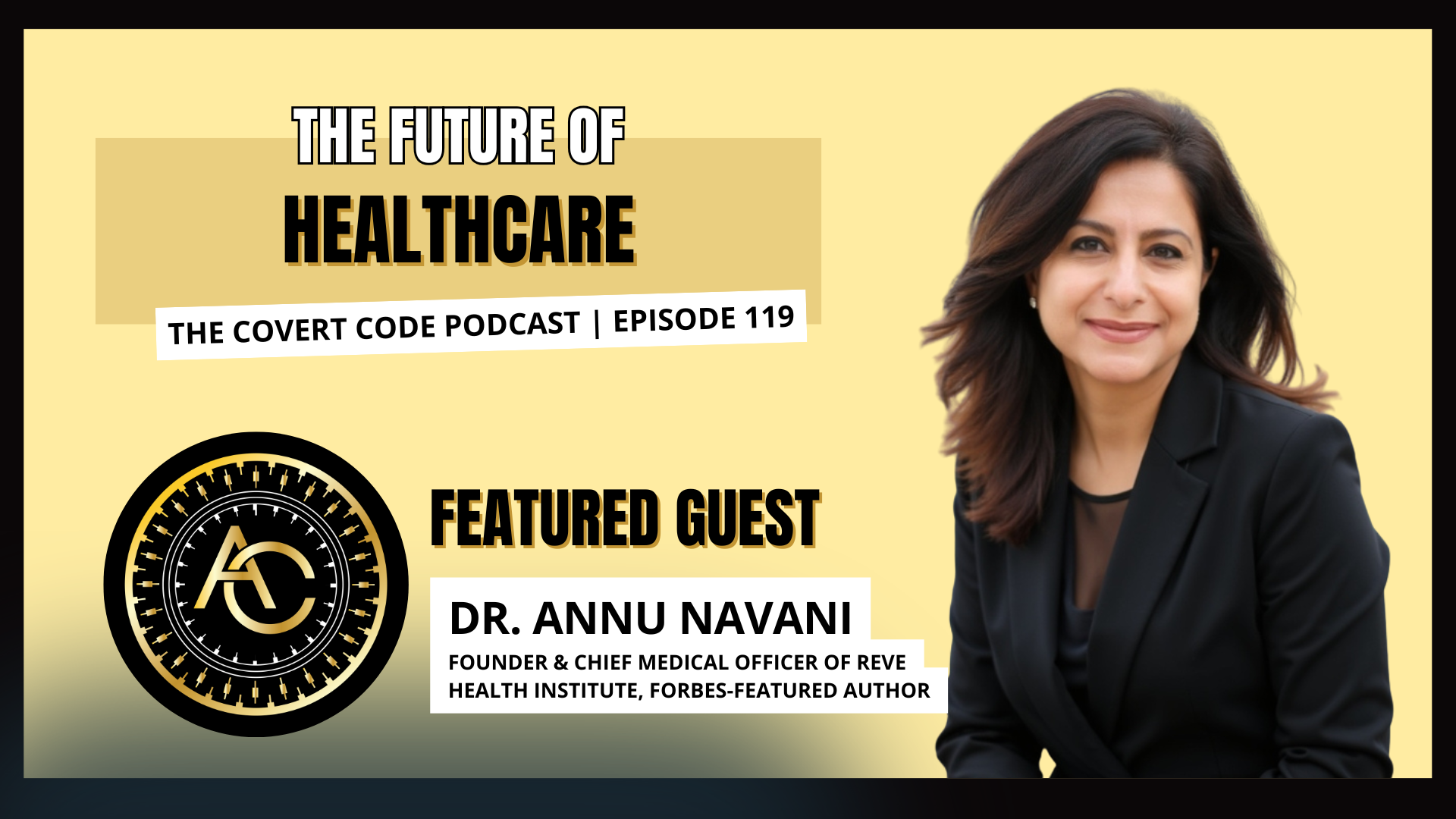
On this episode of The Covert Code Podcast, I sat down with Dr. Annu Navani to discuss the future of healthcare and how artificial intelligence, regenerative medicine, longevity science, and personalized care are transforming what healing may look like in the years ahead.
Dr. Navani is the founder and Chief Medical Officer of Le Reve Wellness, Chief Medical Officer at Boomerang Healthcare, a Stanford adjunct faculty member, and the author of the upcoming Forbes Books title Health Recoded: A Physician’s Guide to Intelligent Healthcare.
This conversation was fascinating because it explored a question many patients, doctors, and innovators are asking right now:
What if healthcare could become more predictive, more personalized, and more preventative?
Why Healthcare Needs to Change
One of the biggest themes from our conversation was that healthcare is still largely reactive.
Too often, people wait until disease, degeneration, or chronic pain appears before treatment begins. By that point, the system is already working from behind.
Dr. Navani believes the future of medicine should move earlier in the process. Instead of simply treating symptoms after they appear, emerging technologies may help identify risks years before serious health conditions develop.
This shift from reactive care to proactive care could completely change how patients experience medicine.
The Role of AI in Intelligent Healthcare
Artificial intelligence is already beginning to reshape healthcare.
Dr. Navani shared how AI can help analyze biomarker data, imaging, lifestyle factors, family history, and patient behavior to create more personalized healthcare plans.
The goal is not to replace physicians.
The goal is to give doctors better tools.
AI can help identify patterns, predict risks, and support treatment decisions, but clinical expertise remains essential. Human judgment, patient context, and physician experience still matter deeply.
This aligns with many of the AI conversations we explore on The Covert Code: the most powerful use of AI is not replacing people but helping experts make better decisions.
Personalized Medicine Is the Future
One of the most important takeaways from this episode was the need for personalized medicine.
Dr. Navani explained that every patient is different. Genetics, weight, biology, lifestyle, health history, and risk factors all influence how someone responds to treatment.
Instead of a one-size-fits-all model, healthcare is moving toward more customized care.
That means treatments may increasingly be designed around the individual patient rather than the average patient.
For patients, this could mean better outcomes, fewer unnecessary treatments, and a more precise path toward long-term health.
Regenerative Medicine and the Body’s Ability to Heal
Regenerative medicine was another major focus of the conversation.
Dr. Navani discussed platelet-rich plasma, growth factors, exosomes, stem cells, and other therapies that may help support healing and prevent further degeneration.
In her work with spine, orthopedic, and musculoskeletal care, regenerative medicine is especially important because the goal is not only to treat pain but also to improve function and quality of life.
She described her philosophy simply:
Find it, fix it, and move it.
That means identifying the root problem, addressing it, and helping the patient return to movement and function.
Can Humans Live to 120?
One of the most interesting parts of the episode was our conversation about longevity.
Dr. Navani believes that with current knowledge, many people may be able to live longer and healthier lives, potentially reaching 120 years.
But the goal is not simply extending lifespan.
The goal is extending healthspan.
Living longer only matters if people can remain active, functional, independent, and mentally sharp.
That is why lifestyle still matters. Diet, exercise, sleep, and stress management remain foundational for longevity, even as advanced therapies continue to evolve.
Preventative Medicine Starts at Home
While the conversation included advanced technologies, Dr. Navani also emphasized simple daily choices.
What we eat, how we move, how we sleep, and how we manage stress all affect long-term health.
Many people look for complex solutions, but prevention often begins with basic lifestyle habits.
Clean nutrition, regular movement, quality sleep, and stress reduction remain some of the most powerful tools available.
Technology may help us see the risks earlier, but daily behavior still shapes the outcome.
Pain Management Must Be Multidisciplinary
Dr. Navani also shared important insight into pain management.
Chronic pain is not just a symptom. It can become a disease syndrome that affects every part of a person’s life, including family, work, movement, mood, and independence.
That is why pain management must be multidisciplinary.
Medication may have a role in some cases, but it cannot be the only strategy. Interventional procedures, regenerative therapies, physical therapy, meditation, nutrition, cognitive behavioral therapy, and lifestyle support may all play a role in restoring function.
The ultimate goal is not just reducing pain.
The goal is improving quality of life.
The Challenge of Access
One of the most difficult parts of this conversation was access.
Many emerging therapies are expensive and not always covered by insurance. That means some of the most promising treatments may only be available to people who can afford them out of pocket.
Dr. Navani believes this has to change.
If preventative and regenerative medicine can reduce long-term healthcare costs and improve outcomes, then the system must find better ways to make these therapies accessible.
That may require policy changes, insurance changes, clinical trials, regulatory support, and new models of care.
The Future of Healthcare Is Intelligent
The future of healthcare may look very different from the system many patients experience today.
It may be more predictive.
More personalized.
More preventative.
More integrated.
And more focused on helping people live healthier for longer.
Dr. Navani’s work points toward a future where patients are empowered with better information, physicians are supported by smarter tools, and medicine becomes less about reacting to disease and more about preventing it.
Listen to the Full Episode
To hear the full conversation with Dr. Annu Navani, visit The Covert Code Podcast.
You can also learn more about Dr. Navani at AnnuNavani.com, explore Le Reve Wellness, or connect with her on LinkedIn and Instagram.
📖 GET THE BOOK: The Covert Code – Mastering the Art of Digital Marketing
Amazon: https://rb.gy/wrht8
Barnes & Noble: https://rb.gy/vwev0a
Target: https://rb.gy/jhpxri
🎧 LISTEN ON ALL PLATFORMS:
Spotify: https://open.spotify.com/show/0UcnL4g4J2DckqMpZg4DdB?si=NKAFJcRMSdOJlP5iebBxoA&nd=1&dlsi=50d6d5c5753a499b
Apple Podcasts: https://podcasts.apple.com/us/podcast/the-covert-code/id1733326615
Amazon Music: https://music.amazon.com/podcasts/d15bb709-a4df-43bb-9284-9e479c8574a7/the-covert-code
iHeart Radio: https://www.iheart.com/podcast/269-the-covert-code-269144900/
YouTube Music: https://music.youtube.com/channel/UCSU2Anqu1_yzb_D6IFd7i_Q
🌐 FOLLOW THE COVERT CODE:
Website: https://thecovertcode.com/
Instagram: https://www.instagram.com/covertcodeofficial
Facebook: https://www.facebook.com/thecovertcode
LinkedIn: https://www.linkedin.com/company/covert-code-official/
📚 ABOUT HOST ANNA COVERT:
Anna Covert is the host of The Covert Code Podcast and the author of The Covert Code – Mastering the Art of Digital Marketing and The Solar Coaster. With over two decades of experience in digital marketing and business strategy, Anna has worked with top-tier companies like Microsoft, Apple, and IBM and leads Covert Communication, Hawaii’s largest digital agency.
ANNA’S WEBSITES:
The Covert Code: https://thecovertcode.com/
Anna Covert: https://annacovert.com/
Covert Communication: https://covertcommunication.com/
Reactium: https://reactium.io/
⚠️ Affiliate Disclosure: Some links included may be affiliate links, which means we may earn a commission if you choose to make a purchase through them at no additional cost to you.
Transcript: The Future of Healthcare — How AI and Regenerative Medicine Are Changing Medicine Forever
Episode: The Covert Code Podcast
Host: Anna Covert
Guest: Dr. Annu Navani
Anna Covert [00:00:04]: Aloha. My name is Anna Covert, and I'm coming to you from my battleship here on the beautiful island of Oahu.
Anna Covert [00:00:12]: This week on The Covert Code Podcast, the topic is the future of healthcare and how artificial intelligence and regenerative medicine are changing medicine forever.
Anna Covert [00:00:26]: My special guest is Dr. Annu Navani, founder and Chief Medical Officer of Le Reve Wellness, Chief Medical Officer at Boomerang Healthcare, Stanford faculty member, and author of the upcoming Forbes Books title Health Recoded: A Physician's Guide to Intelligent Healthcare.
Anna Covert [00:00:51]: Thank you so much for joining me today.
Dr. Annu Navani [00:00:55]: Thank you, Anna. It's wonderful to be here.
The Journey Into Medicine
Anna Covert: I always like to start with the CliffsNotes version. How did you get from where you were to where you are today?
Dr. Navani: My journey into medicine began very early. I've always been fascinated by how the human body works and how we can help people heal. Over the years, I became increasingly interested not only in treating disease but in understanding why disease develops in the first place.
Dr. Navani: That curiosity eventually led me toward pain management, regenerative medicine, longevity, and intelligent healthcare systems.
Why Healthcare Must Change
Anna Covert: One of the things we discussed is that our healthcare system tends to be reactive rather than proactive.
Dr. Navani: Exactly. We often wait until patients become very sick before intervening. By then, disease has frequently progressed significantly. We need to move toward prevention, early detection, and personalized care.
Dr. Navani: The future of medicine is identifying risk factors earlier and helping patients make changes before serious illness develops.
The Role of Artificial Intelligence
Anna Covert: AI is impacting every industry. How do you see it affecting healthcare?
Dr. Navani: AI has enormous potential. It can analyze large amounts of patient data, identify patterns, and support physicians in making better decisions.
Dr. Navani: The goal is not to replace physicians. The goal is to give physicians better tools to help patients.
Dr. Navani: Human judgment, compassion, and clinical experience remain essential.
Personalized Medicine
Dr. Navani: Every patient is unique. Their genetics, lifestyle, environment, and medical history all influence health outcomes.
Dr. Navani: Personalized medicine allows us to tailor treatment plans to each individual rather than relying on generalized approaches.
Anna Covert: That seems like one of the biggest shifts happening right now.
Dr. Navani: Absolutely.
Regenerative Medicine
Anna Covert: Can you explain regenerative medicine?
Dr. Navani: Regenerative medicine focuses on helping the body heal itself. This includes therapies such as platelet-rich plasma, growth factors, and stem-cell-based treatments.
Dr. Navani: Our philosophy is simple: find it, fix it, and move it.
Dr. Navani: We want patients to regain function, improve quality of life, and return to the activities they enjoy.
Can Humans Live to 120?
Anna Covert: One of the most fascinating questions we discussed was longevity.
Dr. Navani: The science of longevity continues to advance. Many researchers believe longer, healthier lives are possible.
Dr. Navani: The goal isn't simply to extend lifespan. The goal is to extend healthspan so people remain active, engaged, and healthy for more years.
Lifestyle Still Matters
Dr. Navani: Technology is important, but lifestyle remains foundational.
Dr. Navani: Nutrition, movement, sleep, stress reduction, and social connection continue to play enormous roles in health outcomes.
Dr. Navani: We cannot overlook the basics.
The Future of Healthcare
Anna Covert: If you look ahead ten years, what does healthcare look like?
Dr. Navani: I believe it becomes more personalized, more preventative, and more intelligent.
Dr. Navani: Patients become more informed. Physicians have better tools. Technology supports decision-making. Healthcare becomes proactive rather than reactive.
Dr. Navani: Ultimately, we help people live healthier lives for longer.
Final Thoughts
Anna Covert: What advice would you give someone listening today?
Dr. Navani: Take ownership of your health. Ask questions. Be proactive. Focus on prevention. The decisions you make every day matter.
Anna Covert: Thank you so much for joining us today.
Dr. Navani: Thank you. It was wonderful speaking with you.
Anna Covert: If you have not yet subscribed, please do so. We continue to bring you industry experts and thought leaders helping you succeed both online and offline.
Anna Covert: I can't wait to see you next week in the pixels. Aloha.